date_range
Saturday 24 Oct 2026


 LOCAL EDITION
close
 LOCAL EDITION


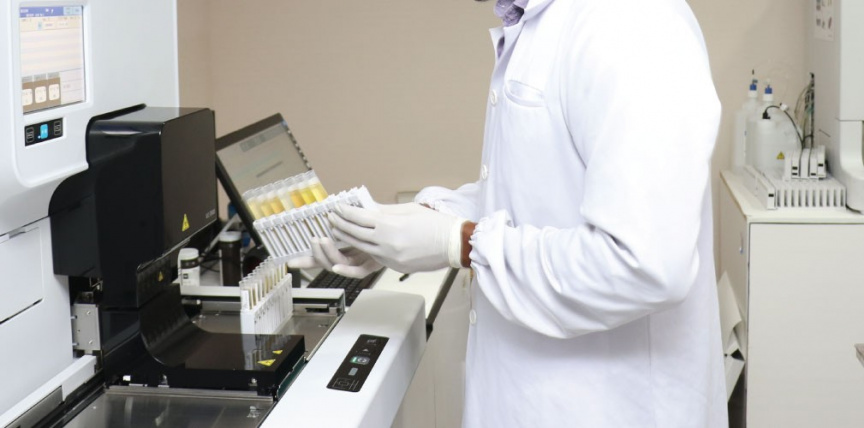
IGMH laboratory. (Photo/IGMH)
The Maldives Blood Services (MBS) will introduce the nucleic acid test (NAT), the global gold standard for detecting blood‑borne diseases, in July, significantly strengthening the safety of donated blood in the Maldives.
Speaking on a state media programme on Wednesday, MBS Senior Specialist Registrar and Paediatrician Dr Ahmed Umar said ensuring the safety of both blood donors and recipients is a major priority for the agency. He noted that the NAT machine is expected to be installed and commissioned within the next two weeks as part of efforts to adopt a more robust testing method.
Dr Umar said MBS already conducts screening using the latest available technology, and that no blood is transfused without mandatory disease testing. The introduction of NAT will further expand the detection window for blood‑borne infections.
“Blood will not be given unless it is tested for certain diseases. We are now moving to a better method than the current one,” Dr Umar said.

He added that donors are already screened according to World Health Organization (WHO) standards before completing the donation process, but NAT will enhance the ability to detect infections at an earlier stage.
MBS reports that the number of blood donors in the Maldives continues to rise compared to previous years, with a notable increase in young donors aged 18 and above. The agency emphasises the importance of maintaining a steady pool of regular donors, especially as June 14 is marked annually as World Blood Donor Day to encourage voluntary donation.
Blood diseases such as thalassaemia can be effectively prevented through pre‑marital carrier screening and genetic counselling. However, strict penalties for non‑compliance remain highly debated internationally. While countries such as Saudi Arabia use compulsory screening to reduce at‑risk marriages, penalising or restricting marriage for carriers raises significant ethical and human‑rights concerns.

The Maldives has one of the highest thalassaemia carrier rates in the world. While the global average sits around 1.7 percent, an estimated 16 percent to 18 percent of Maldivians are beta‑thalassaemia carriers. This means roughly one in every 30 marriages occurs between two carriers, dramatically increasing the likelihood of children being born with severe, life‑threatening Thalassaemia Major.