date_range
Tuesday 20 Oct 2026


 LOCAL EDITION
close
 LOCAL EDITION


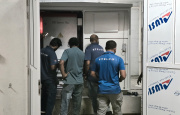
Two staff at a construction site: Businesses in all sectors face financial hardship as price hikes (Sun Photo/Mohamed Afraah)
A recent survey conducted by the Maldives Monetary Authority (MMA) indicates that businesses across all major sectors expect a decline in financial performance during the current second quarter of the year.
The Quarterly Business Survey, conducted between March 29 and April 18, gathered information from 97 businesses operating in tourism, construction, wholesale and retail trade, and transport and communication.
The survey findings revealed that while most sectors, with the exception of construction, experienced growth during the first quarter, between January and March, there was a corresponding increase in recruitment. However, this growth was accompanied by rising operational costs, leading to higher prices for goods and services. Businesses cited several factors for this trend, including supply chain disruptions linked to geopolitical tensions involving Iran, rising fuel prices, increased import costs, and the appreciation of the US dollar.
In the tourism sector, although growth continues, it is at a slower pace compared to previous periods. Forecasts for the second quarter suggest a decline in resort bookings and occupancy rates, coupled with an anticipated rise in operating expenses.

The construction sector faced a slowdown in activity during the first quarter, with businesses reporting increased costs primarily driven by the rising prices of fuel, materials, and shipping. Many respondents highlighted that the closure of the Strait of Hormuz, amidst ongoing Middle East conflicts, has had a significant negative impact on their operations.
The wholesale and retail sectors also anticipate an average increase in the price of goods. Despite this, businesses in these sectors expect their overall financial state to deteriorate during the current quarter, attributing the price hikes to shipping costs, fuel prices, and fluctuations in the dollar exchange rate.
Similarly, the transport and communication sectors project a decrease in revenue for this quarter. While service charges are expected to rise, these businesses noted that supply chain disruptions continue to pose significant operational challenges.
Although the official exchange rate for the US dollar remains at MVR 15.42, businesses face increasing difficulty in accessing foreign currency at this rate. Consequently, the black-market rate has surged, consistently staying above MVR 20 per dollar.
As a nation heavily dependent on imports, the rising cost of the dollar directly translates to higher domestic inflation. Public concern has intensified as geopolitical instability threatens to dampen tourism arrivals, potentially reducing the country’s primary source of foreign exchange. According to the latest data from the National Bureau of Statistics, the price of essential goods in Malé reached its highest year-on-year increase in May.