date_range
Monday 24 Aug 2026


 LOCAL EDITION
close
 LOCAL EDITION


Male' Fehi; A plant nursery previously operated by Male' City Council. (Sun Photo/Mohamed Hayyan)
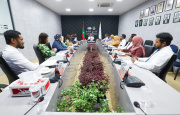
Male’ City Council, on Wednesday, has unanimously approved growing plants used in traditional Maldivian medicine (Dhivehi Beys) across vacant plots in the capital.
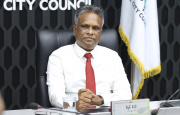
The proposal, which was submitted by Mayor Adam Azim, calls for the use of vacant land, including unused spaces within cemeteries, to grow medicinal herbs and plants. Azim noted that traditional medicine practitioners have raised concerns over difficulties of obtaining the herbs and raw materials required for their work.
The Mayor added that consultations with several religious scholars had confirmed that there are no religious restrictions on cultivating medicinal plants in vacant areas within cemeteries.
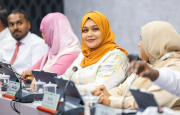
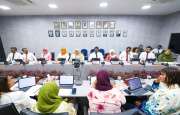
The proposal prompted extensive discussion among council members who had differing views.
South Maafannu Councilor Ibrahim Labaan Shareef pointed to the limited availability of land in Male’ and questioned the practicality of cultivating such plants in the city, suggesting that the required herbs could instead be sourced from other islands.
Meanwhile, South Galolhu Councilor Ismail Haleem and North Henveiru Councilor Fathimath Laiza argued that the City Council should oversee the cultivation process rather than leasing land to private parties. They proposed that the Council manage the initiative and supply the required herbs directly to traditional medicine practitioners.

West Maafannu Councilor Mohamed Rizwan Ali expressed concerns about cultivating medicinal plants in cemeteries or unkept areas. He recommended that the initiative be carried out on other vacant plots within the city.
"There are other vacant lands in Male’ City where trees can be planted. I believe it is better to carry this out in locations other than cemeteries," he stated.
In response to the concerns raised, Mayor Azim amended the proposal to focus on vacant land across the city rather than specifically including cemetery grounds.
Vilimale’ Councilor Ibrahim Samah noted that many plant species used in traditional medicine are becoming increasingly scarce and difficult to obtain. He suggested establishing a dedicated medicinal plant park as a long-term conservation measure and agreed that the initiative should be led by the City Council.
"I propose that we grow these plants ourselves under our Council supervision, and consult with practitioners and provide them with the necessary support: to grow these endangered plants in vacant plots,” Mayor Azim said.