date_range
Monday 26 Oct 2026


 LOCAL EDITION
close
 LOCAL EDITION


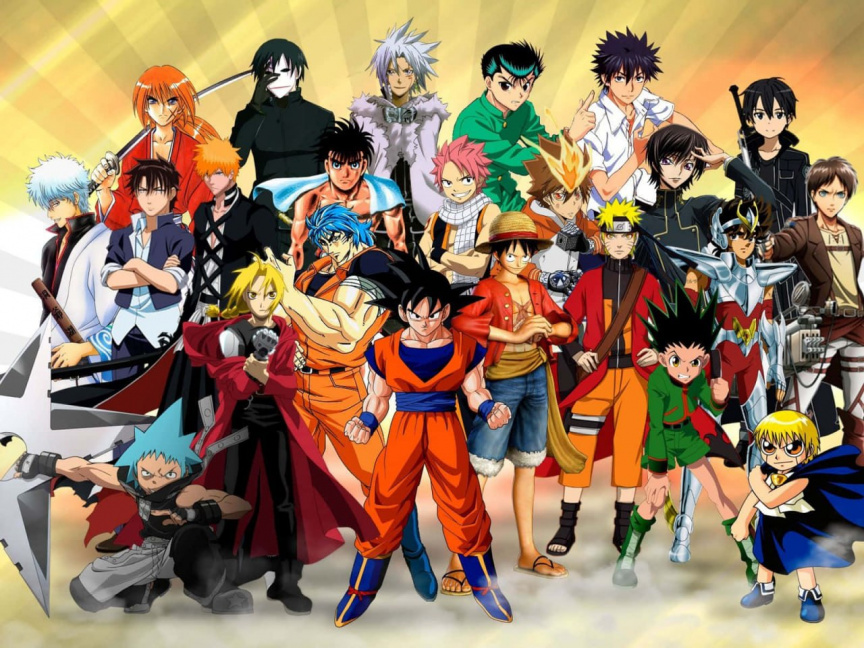

I saw the post above on Instagram recently that led me to dig deeper in a month-long rabbit hole. Let me first proudly exclaim that I am from the “Naruto” generation. It wasn’t just the first Anime I ever watched, but also the anime that saved me as a child. Safe to say, I agreed wholeheartedly with the post I discovered, and this article will discuss why I believe it to be true.
Starting off with my least favorite topic: my childhood
*enter dramatic flashbacks*

A little background on myself will elaborate why I related so hard to the character Naruto as a kid. I’m the oldest among three sisters—and you know what they say about the oldest child. No, I will not elaborate further. As mostly a lonely child, I didn’t have a lot of friends in school—the only people I had around me that I could get along with were my cousins of the same age, and even then, I had trouble completely fitting in. Back then, I found myself morphing into whoever I believed would be a version people around me preferred. Picking up on social queues from an early age, I learnt to read people’s expressions, behaviors, attitudes, and tones. This led to me being even more awkward around people, trying to read the signals they were ever so indirectly and effortlessly sending me. This is a habit that transcended to my adulthood, as well.
I struggled for years trying to figure myself out, roaming on the empty and dark streets with no light on. The reflection that looked back at me in the store mirrors was eerily unfamiliar (metaphorically speaking—sorry, I’m a poet). I felt increasingly invisible, to the point where I started rebelling against my parents and everyone surrounding me. Though they were methods of self-sabotaging, I realize now as an adult that most of my displeasing acts back then were only for attention—because negative attention is still better than being invisible.
Why is this “stupid cartoon” so special?

Now, let’s get into the anime. Naruto centers on an orphan named Uzumaki Naruto, an energetic yet lonely young ninja growing up in Konoha (the Hidden Leaf Village). Feared and rejected by others because he unknowingly carries the powerful Kurama (the Nine-Tailed Fox spirit) sealed within him, Naruto struggles with isolation from a very young age. One of the most defining parts of his story is exactly this—the deep isolation he felt growing up. From the outside, it looks like he’s just loud, mischievous, and attention-seeking—but that behavior is really a response to years of being ignored and rejected.
As a child, Naruto doesn’t understand why the adults in his village avoid him, whisper about him, or look at him with fear and resentment. Because the Nine-Tailed Fox that once attacked the village is sealed inside him, many people associate Naruto with that destruction. Instead of seeing him as a child, they see him as a reminder of trauma. Shopkeepers refuse to serve him, parents keep their children away from him, and he grows up without the warmth of family or community.

This kind of loneliness shapes his entire personality. Naruto acts out—not because he wants to cause trouble, but because negative attention is still better than being invisible. His dream of becoming Hokage (the strongest ninja and leader of the village) isn’t just about power or status; it’s rooted in a desperate desire to be acknowledged, accepted, and valued by the very people who once pushed him away.
I assume you now understand why I related to him so much. When I first discovered Naruto on Cartoon Network, I was intrigued. Soon enough, I found myself to be a deeply devout fan of the show. See, the story of Naruto isn’t only just relatable to me but also beautiful. The reason why it’s so beautiful is because the show teaches us that your future depends solely on the choices you make and your own determination. What makes Naruto’s journey especially powerful is that, despite this emotional neglect, Naruto chooses empathy over bitterness. He understands loneliness so deeply that he recognizes it in others—especially in Uchiha Sasuke, whom he shares a deep and cherished bond with. While Sasuke isolates himself out of grief and anger (after his entire clan was killed by his older brother), Naruto fights against isolation, constantly reaching out and refusing to give up on connection.

In many ways, Naruto’s story isn’t just about becoming a great ninja—it’s about overcoming the pain of being unwanted and proving that even someone who starts with nothing can create meaningful bonds and a sense of belonging. It’s an amazing portrayal of resilience, determination, and choices. I am someone who’s always believed that kindness is a choice—the same as cruelty. Naruto was shut out from his entire community since he was an infant, and he still chose to be kind and save all those people who despised him his entire life. Not just that, but the anime did an amazing job at portraying that some of those who choose to be cruel are also doing so out of pain. Out of love. Out of any other reason they believe justifies their actions. But rather than shunning them, judging them, or even killing them off, Naruto chooses to understand them. And in doing so, he sees them as human beings who were good and still are capable of being so. In listening to them, talking to them and understanding them, he becomes a pillar of hope for the villains—showing them that even cruelty is a choice. That despite everything bad that’s happened to them in the past, choosing to be kind is still an option. And that it does come with its own rewards.
Naruto is rewarded with his own chosen family—special, irreplaceable bonds, and love beyond comprehension. Acceptance and respect. His kindness and the strength gained from his hard work (all those years training) eventually made him become the Hokage of Konoha.

No prince saved me—just a blond kid who says “dattebayo” a lot

Here, I will discuss broadly what the Instagram post said.
It talks about how, in recent years, psychologists have begun noticing a fascinating trend: teenagers who grew up watching anime like Naruto often display greater resilience to stress than previous generations who were raised primarily on traditional fairy tales. I used to be a huge fan of fairy tales as a kid—that is until I discovered Naruto—which helped me realize the way I was coping with conflict. While fairy tales have long been celebrated for imparting moral lessons, they often teach avoidance. Stories about princesses waiting to be rescued or children warned to “stay away from danger” encourage passivity and dependance on external forces. Anime, in contrast, places its characters in situations where they must confront challenges head-on, endure hardships, and learn to persevere. This active approach to adversity subtly trains viewers to face difficulties in their own lives, rather than waiting for luck or someone else to save them.

Another key difference lies in how anime handles the concept of darkness and evil. Traditional fairy tales often frame conflict as a battle between absolute good and absolute evil, leaving little room for nuance. Anime, however, frequently explores the complexity of human nature, encouraging characters to confront and integrate their own “dark sides.” Protagonists like Naruto or characters in series such as Fullmetal Alchemist show that personal growth often involves acknowledging one’s flaws rather than simply defeating an external villain. For young viewers, this fosters self-awareness, emotional maturity, and a healthier understanding of their own internal struggles.

Anime also promotes empathy and more sophisticated thinking. Villains are rarely evil for no reason; they often have tragic backstories or circumstances that shaped their behavior. By watching these stories, teens learn to understand the causes of others’ actions, rather than interpreting people in strictly black-and-white terms. This complexity nurtures critical thinking and emotional intelligence, skills that traditional fairy tales rarely demand. Through exposure to morally gray characters and situations, children can practice empathy in safe, imaginative contexts.
In stories like Sleeping Beauty, Maleficent is portrayed as an evil villain with no backstory given to her character. She is bad simply because that is who she is. When the cartoon was adapted as a live action, they gave Maleficent a heart-breaking backstory, adding more to her character and personality. We can see why she became the villain she was in the Disney version of it and are able to empathize with her. Anime doesn’t portray their villains as evil or bad—they portray them as people who lost their way due to loss, grief, and pain. They teach us to try and understand them rather than judge them based on their actions alone—with no knowledge of who they are. I have always been a firm believer that good and bad co-exist, and there will be none without the other. No person is inherently good or bad but can choose to be either—while still having the capability and capacity to be both. Everything is a choice.

A further contrast is the emphasis on effort and discipline. Success in anime rarely comes from magical interventions or sheer luck. Characters grow stronger through rigorous training, repeated failure, and relentless determination. This focus on hard work and persistence instills a sense of self-efficacy in viewers, showing them that their actions—and their effort—can shape their own destinies. Such lessons are far more practical for real-life challenges than the sudden, often magical resolutions found in many fairy tales.
Lastly, anime equips young viewers with resilience in the face of isolation, failure, and rejection. Many anime protagonists start off misunderstood, lonely, or ridiculed, yet they gradually overcome these obstacles through perseverance, forming meaningful confidence that they too can face adversity, recover from setbacks, and take proactive steps to improve their circumstances.
My personal takeaways from anime
I’ll admit that I haven’t watched a lot of anime to be writing this article, but that doesn’t negate the fact that I have learnt much more from the handful of anime I have watched rather than the countless fairy tales I grew up on. For the longest time, I had only sought asylum in Naruto without wanting to explore more, similar shows. I suppose I wanted to remain loyal to him and shifting my admiration to other characters would be a betrayal to the character who saved me. But eventually, I began to slowly experiment with more shows.

A show I feel is a bit underrated is Black Clover, which reminds me of Naruto in many ways, though the story is entirely different. It follows two orphans, Asta and Yuno, who grow up together at a church. In a world where everyone has magical abilities, Asta is born without magic, while Yuno is exceptionally talented. When grimoires—magical spellbooks—choose their owners, Yuno receives a powerful four-leaf clover grimoire, and Asta receives nothing. Everyone laughs, but instead of giving up, Asta trains his body tirelessly, determined to achieve the same dream as Yuno: becoming the Magic Emperor.

Asta’s journey is about resilience, hard work, and never giving up, and it truly reminds me of Naruto. One scene that really hit me is when Asta faces an elf (opponent during a war) his mentor tells him to kill. Instead of following orders blindly, he asks, “Why? Why should I kill him when I can try to understand him?” He then continues to say, “He’s lost someone he loves, that’s why he’s doing this. We’ve lost people we love, too, that’s why we are doing this. Wouldn’t it all be easier if we all just stop fighting and try to understand each other?” And I kid you not, it made me cry. This scene is also such a great depiction of not following orders blindly from those who are superior to you. It teaches us to question those with authority and their choices. Their position doesn’t determine that they are always in the right.
Anyway, I digress…
Anime doesn’t consist only of violence and characters that act out from time to time. Anime isn’t all that stupid, either. They’re also not just about the visuals and the animations—I love anime because of the stories. Because of how realistic they are, despite them being fictional. Because of how they portray human beings. The main moral I’ve learnt from every single anime I have watched thus far is what I said earlier in this article;
Kindness is a choice. And so is cruelty.
But you know what else is a choice? Trying to understand the reason why someone is behaving the way they do. Rather than taking a step back and completely removing yourself from the situation, maybe take a step forward and lend a hand. Maybe they need it.
Maybe you need it, too.

If you wish to check out my sources and read on this more, visit the links below: