date_range
Wednesday 14 Oct 2026


 LOCAL EDITION
close
 LOCAL EDITION


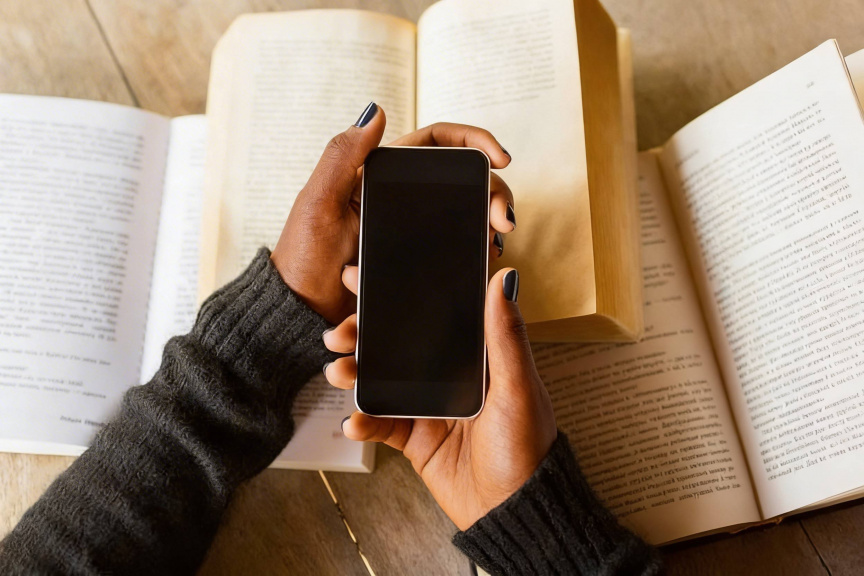
As someone who has always been fascinated by language and storytelling, I often found myself buried within the pages of books from a very early age. I suppose most of it is thanks to my mother, who, with her own love for the English language, encouraged me to excel in writing and speaking skills.
I don’t remember the first time I picked up a book, but I remember going to the library during primary school. While every other kid sat with their friends and gossiped quietly, I had my face tucked away in a random book I found collecting dust on the shelves—uncared for and untouched.
In the fourth grade, we were assigned a task to write a short story of any genre in our English class. Unsurprisingly, I chose to write something horror (I love horror-fiction). I had never completed any homework as passionately as I did that one. I think my teacher could tell, because she was incredibly impressed with my writing and storytelling—to the point that she made me stand and read it aloud to the entire class. That’s when my mother realized I had true talent for writing and a love for the English language. It was also when I came to realize the same.
Since then, my mother encouraged me to participate in various writing competitions at school. Whether it was essays, stories, or even poetry, I took part. All those years of exploring this talent and strengthening my writing skills have brought me to where I am today.
But reading isn’t only beneficial for those who have a talent and passion for writing. It is also extremely important for children’s brains during their most crucial development stages. Not only does it enhance imagination, but it also plays a major role in helping us form our own opinions and develop critical thinking skills—something widely supported by cognitive research on reading and comprehension.
The current reality: “We didn’t mean to stay this long…”
We live in an era where digital media consumption is normalized and rapidly increasing. Almost every social media platform is built in a way that captures our attention instantly and encourages doomscrolling—something even researchers and platforms themselves have acknowledged when discussing algorithm-driven engagement.
Think about it—what exactly is the point of scrolling through platforms such as TikTok and Instagram? It’s not like we’re learning much. Most of the content posted on these platforms is simply meant to entertain, but it often becomes a direct route to what many now refer to as “brain rot.”

The algorithms are designed in a way that keeps us hooked. We watch one reel from start to end about something completely pointless, and suddenly our feed is filled with similar content. While there are creators who post informative videos, they are often overshadowed.
I admit that I have also fallen into the web of doomscrolling. Even now, I could open Instagram to message a friend and get distracted by the reels that appear on my page. I don’t realize how hooked I am until hours later—and it doesn’t make me feel good about myself. I could have spent that time doing something far more meaningful.
This pattern of short and fast content is also affecting our attention spans. Since everything is designed to be quick and easy to consume, our brains begin to prefer that format. Studies and discussions around digital consumption have even linked this to declining attention spans and increased susceptibility to misinformation (as highlighted by organizations like the World Economic Forum).
I used to watch YouTube videos that were two hours long, but now my attention span has dropped to the point where I can barely get through one-hour content.
The education system: “Wait… what happened to school?”
What’s even more concerning is that this shift isn’t just happening because of social media—it is also reflected in our education system.
When we were in school, we were given reading comprehensions, book reviews, and writing tasks that forced us to think, interpret, and analyze what we read. Those exercises were not easy, but they were necessary. They pushed us to form opinions and engage with texts on a deeper level.

My youngest sister, however, hasn’t had the same experience. During her primary years in school, she rarely got such tasks. And it made me realize—things are changing.
The curriculum keeps shifting, and in many ways, it feels like it is diminishing rather than improving. Important components that build critical thinking—like comprehension and analysis—seem to be slowly reduced or removed.
Reading comprehension is not just about understanding words, but a complex cognitive skill that involves reasoning, interpretation, and connecting ideas—something emphasized in multiple education and neuroscience studies.
We end up with students who can read—but struggle to think critically about what they are reading.
And that is a dangerous shift.
The book ban: “Imagine silencing literal books”
In 1637, the first American book ban occurred in Quincy, Massachusetts. The book The New English Canaan (or New Canaan) by Thomas Morton was banned by the government as it was considered “a harsh, satirical critique of Puritan customs, religious practices, and power structures.”

To be clear, book bans are generally the removal, restriction or suppression of books from libraries and schools, often based on objections to their content. This ban is particularly targeted towards books addressing race, sexuality, and gender.
The book ban has severe repercussions on society, specifically on the younger generations. Such a massive restriction can potentially lead to a homogenized worldview, stifling the ability of students to think independently and empathize. Especially during a time when wars and genocides are presently ongoing, such limitations are likely to narrow the possibilities of obtaining proper knowledge on these horrors and understanding them. We are derived of the full picture, and I can’t help but question the intent behind such restrictions. Without proper education, skills and the necessary tools being provided to us that will aid us in gaining a broader understanding on world matters, we are more prone to be brainwashed. While the book ban currently has only been taking place within the US, it is extremely likely that other world leaders will eventually jump on the opportunity to establish the same rules within their own countries.

But of course, this is only my personal opinion and does not necessarily reflect a view that is widely shared.
When faced with the truth of this potential reality, such major decisions that restrict us from gaining proper knowledge are quite frightening and alarming.
Why reading is important: “Yes, it is that deep!”
Recently, I had a conversation with a close friend about the benefits of reading. It doesn’t only keep us informed about past and current events, but it also has a powerful impact on our minds.
When children are encouraged to read from a young age, they learn language in a way that cannot be easily taught. Simply by reading, we are able to create images in our minds and connect them with the words on the page. This strengthens imagination and creativity—skills that are essential in real life.
Personally, reading has helped me grow and express myself in ways that are more thoughtful and creative.

I also strongly believe that both fiction and non-fiction are valuable in their own ways. Reading allows us to form our own thoughts and opinions. Even when something is written as fact, it is often shaped by the writer’s perspective—and we don’t have to agree with everything we read.
This is especially true for fiction. I enjoy reading stories with unreliable narrators because they push me to think beyond what is being told. They force me to question, to analyze, and to fill in the gaps.
My interpretation of the book Sputnik Sweetheart by Haruki Murakami was vastly different from that of a friend who read the same book. That difference in perspective led to a meaningful and engaging conversation where we explored our interpretations and respected each other’s viewpoints.
That is the beauty of reading. It encourages discussion, critical thinking, and understanding.

The reason reading is so important is not just because it improves language, writing, or imagination—but because it teaches us to think.
In an era where misinformation spreads like wildfire and technology continues to shape how we consume content, the ability to question and think critically is more important than ever. Without it, we become passive. We stop questioning. We become more vulnerable to influence.
What are we if we don’t have our own opinions? If we don’t think, therefore, are we?
If you’re reading this and feel like your skills have slowly been decaying and dying—if you want to think more deeply, have more meaningful conversations, and enhance your intellect—pick up a book. Read it. Then question it.
And yes—start that book club! Make that blog dedicated to book reviews! If you’re going to be active on TikTok, let it be on BookTok! Because in a time that rewards distraction, reading is one of the few acts that still demands thought. Don’t let that flame die out.
If you want to check out more articles similar to mine, check out the following links: