date_range
Tuesday 22 Sep 2026


 LOCAL EDITION
close
 LOCAL EDITION


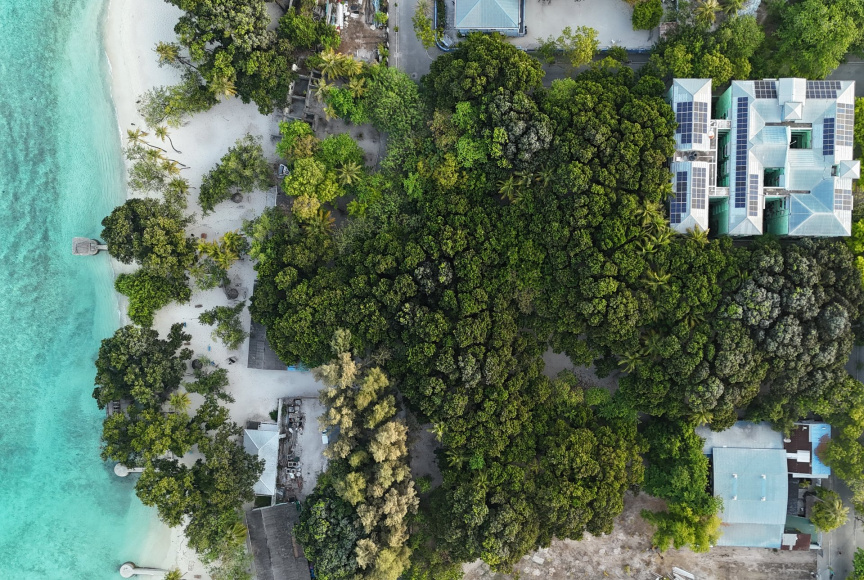
An aerial photo of the 'Funa' area, which refers to Calophyllum inophyllum, an evergreen tree known as the Alexandrian laurel wood, beauty leaf, or dilo oil tree, in Villimale', which is under threat from governmental projects. (Photo/Save Maldives)
Environmental rights group Save Maldives has issued a public letter urging the government to halt the destruction of old green spaces in Villimale' and to stop planned construction projects that would clear large areas of mature trees.
The letter, released Wednesday, calls on authorities to protect Villimale's natural environment, described as the only island‑like, still‑rural neighbourhood remaining in the Greater Male’ Region.
The group highlighted two major projects currently planned for Villimale':
Three 17‑storey residential towers being developed by Rasheed Carpentry and Construction (RCC) through the Bank of Maldives, which include 300 flats and would require clearing more than 100 old trees.
A 100‑bed hospital allocated to the Chinese government, planned on land containing more than 50 trees.

Save Maldives noted that many of these trees fall within Block 30, an area legally protected under environmental regulations. The letter argues that the projects should be relocated to reclaimed lands such as Hulhumale, Gulhi, Giraavaru or Fushidhiggaru lagoons, areas dredged at significant state expense specifically for housing development.
The group said it is unacceptable to destroy Villimale's remaining greenery while large reclaimed lands remain unused. It also argued that instead of further congesting the capital region, investment should be directed toward improving regional hospitals in the atolls.
With 41 percent of the country’s population living in the Greater Male’ area, the letter describes Villimale' as the only accessible natural space where residents can find peace and connect with nature. It warns that irreversible environmental damage in the name of housing and healthcare expansion would ultimately harm public health.