date_range
Saturday 24 Oct 2026


 LOCAL EDITION
close
 LOCAL EDITION


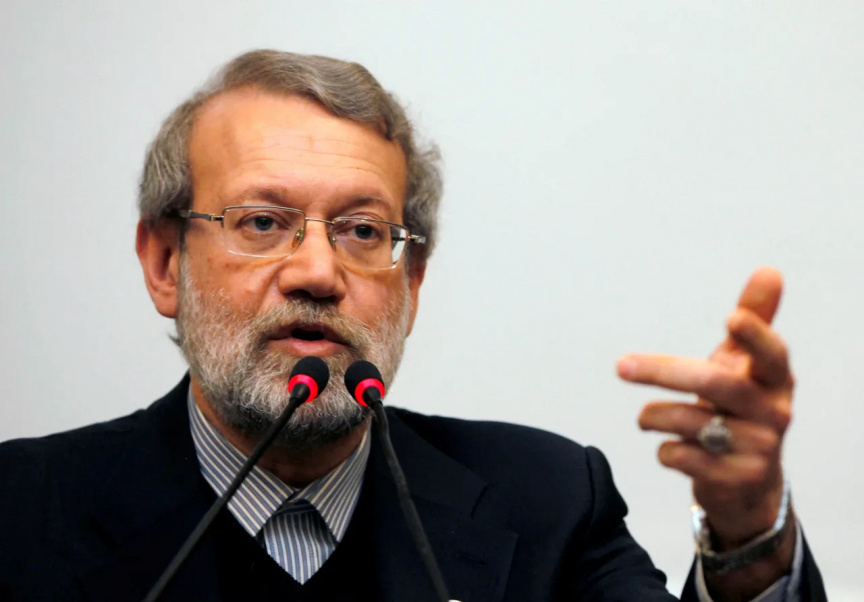
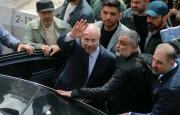
Ali Larijani. (Photo/Reuters)
Ali Larijani, the Secretary of Iran's Supreme National Security Council, has been assassinated in an Israeli air strike on Tehran, marking the end of a four-decade career that saw him evolve from a Revolutionary Guard commander into the strategic linchpin of the Islamic Republic.
Larijani was widely regarded by observers as the “man of the moment.”
His steady hand was seen as crucial in maintaining the cohesion of the Iranian system during the tumultuous transition following the assassination of the previous Supreme Leader, Ali Khamenei, on 28 February, through to the recent appointment of the new leader, Mojtaba Khamenei.
A life in the corridors of power
Born on 3 June 1957 in Najaf, Iraq, Larijani belonged to one of Iran's most influential political dynasties.
His academic background was as rigorous as his political one; he completed undergraduate studies in computer science at the Sharif University of Technology before obtaining a doctorate in philosophy from the University of Tehran.
This intellectual foundation often lent a pragmatic, calculated tone to his later diplomatic and legislative roles.
His career began in 1981 as head of the Central News Unit, but he soon moved into the military sphere, joining the Islamic Revolutionary Guard Corps (IRGC) in 1982.
Throughout the late 1980s, he served in senior legal and parliamentary roles within the Revolutionary Guards Ministry, eventually becoming the deputy chief of staff of the IRGC between 1989 and 1992.
From state media to the nuclear file
In the 1990s, Larijani shifted his focus to the nation's cultural and strategic output.
As head of the state media corporation, IRIB, for a decade (1994–2004), he wielded immense influence over the domestic narrative.
However, it was his move to the Supreme National Security Council that elevated him to the global stage.
As the official overseeing Iran's nuclear file during the presidency of Mahmoud Ahmadinejad, Larijani was a fixture in high-stakes international negotiations.
His transition to the legislature further cemented his status.
Elected as a representative from Qom, Larijani served three consecutive terms as Speaker of Parliament from 2008 to 2020.
Though associated with the conservative 'principlist' camp, he was noted for his ability to navigate moderate waters, playing a pivotal role in the passage of the 2015 nuclear deal (JCPOA).
The face of the resistance
In 2025, amidst rising regional tensions, Larijani was reappointed as Secretary of the Supreme National Security Council.
Since the onset of the US-Israeli war on Iran, he had become the public face of the state's response.
In a rare public appearance last Friday, he was seen marching in the International Quds Day rally, projecting an image of stability.
His rhetoric grew increasingly sharp following the death of Ali Khamenei.
"We will not leave the Americans until we take revenge for the assassination of our leader," Larijani had declared.
On the eve of his death, he issued a formal message justifying Iranian strikes on US bases, framing the conflict as a forced necessity.
"Iran was not seeking war, but it will not retreat if it is imposed," he wrote.
As the region teeters on the brink of total escalation, the loss of Larijani leaves a significant void in the inner circle of the new Supreme Leader.
___
Source: TRT