date_range
Thursday 01 Oct 2026


 LOCAL EDITION
close
 LOCAL EDITION


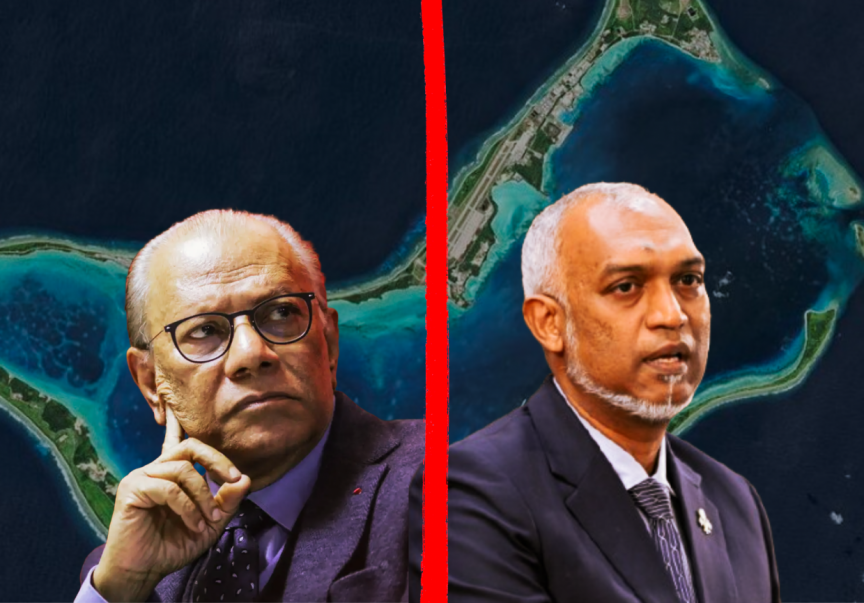
Mauritius has suspended all diplomatic relations with the Maldives.
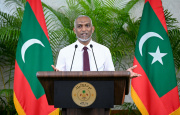
It has been just over two years since the administration of President Dr. Mohamed Muizzu assumed office in the Maldives. Since then, the President has consistently maintained that his government would reverse the previous administration's decision regarding the Chagos Archipelago and the overlapping maritime boundary between the Maldives and Mauritius. He has repeatedly pledged to take legal action to recover the portion of the Exclusive Economic Zone (EEZ) "lost" during the previous term. In his presidential address delivered on the 5th of this month, the President reiterated this stance with firm resolve, emphasizing that there would be no compromise on this issue, as it is a matter of paramount national interest.
While the Maldives has been vocal about its position, Mauritius appeared to remain silent, offering no formal response or reaction. However, a sudden "red line" drawn yesterday has sent shockwaves through the region. The Cabinet of Mauritius decided to immediately sever diplomatic ties with the Maldives. According to a statement released by the Mauritian government, this decision was made to protect its national interests, uphold the UN Charter and international law, and demonstrate its commitment to maintaining regional stability.
Both governments maintain that they are acting in their respective national interests. President Muizzu had previously drawn a symbolic "red line" in the Maldivian diplomatic arena to define the boundaries of the nation's sovereignty and independence. The pressing question now is: which of these two "red lines" between the Maldives and Mauritius will be the first to fade or be erased?
The "loss" of Chagos and the maritime division
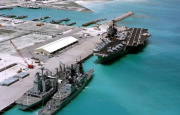
The Maldives has historically opposed Mauritius's claim to sovereignty over the Chagos Archipelago. In a 2019 UN vote on the matter, the Maldives voted against Mauritius. Subsequently, in the same year, Mauritius sought a consultative opinion from the International Court of Justice (ICJ) regarding its sovereignty over Chagos.
However, in 2022, former President Ibrahim Mohamed Solih sent a letter to the then-Prime Minister of Mauritius, revealing a significant shift in a long-standing state policy. In the letter, Solih stated that the Maldives would vote in favor of Mauritius in future UN proceedings regarding Chagos and would drop its claim of sovereignty over the archipelago. Nevertheless, the letter maintained that the Maldives' stance on the maritime boundary would remain unchanged, asserting that the area should not be divided as it has traditionally been a fishing ground for Maldivian fishers.

Despite this, the Maldives' concession regarding the islands reportedly due to a lack of sufficient evidence led to the ICJ ruling in favor of Mauritius, advising the United Kingdom to return the archipelago. Following this, the International Tribunal for the Law of the Sea (ITLOS) upheld the ICJ's findings in a case regarding the delimitation of the maritime boundary between Chagos and the Maldives. This resulted in the division of a 95,000 square kilometer overlapping area. Upon taking office, President Muizzu arrived with a major pledge to reclaim what was lost.
Why did it reach the point of severing ties?
From the perspective of Mauritius, the Chagos issue is the culmination of years of arduous diplomatic and legal efforts. Following the ICJ's advisory opinion and UN General Assembly resolutions, Mauritius entered into negotiations with the United Kingdom to secure the return of the territory.
Consequently, Mauritius views any party that questions its sovereignty or interferes with the UK-Mauritius agreement as an obstacle to its hard-won diplomatic success. This perception is a primary reason for the deterioration of relations. The Mauritian Cabinet's decision to sever ties was explicitly framed as a measure to protect "national interest" and "territorial integrity."

The Maldives, too, prioritized its national interest, but in direct opposition to Mauritius. The official stance of the Maldivian government is to defend every mile of its sovereign maritime territory, regardless of the nation's size.
The current administration's policy on the Chagos issue enjoys significant public support. Many Maldivians view the ITLOS decision as unjust and consider the previous administration's shift in stance as a strategic error. Therefore, seeking a legal remedy is presented as an opportunity for the government to rectify past mistakes.
Furthermore, while Mauritius is focused on implementing what it considers a settled international matter—the handover of Chagos—the Maldives is attempting to reopen the case. Mauritius relies on the decisions of the UN and ICJ, whereas the Maldives prioritizes initiating new legal proceedings.
The severance of diplomatic ties indicates that this is more than just a disagreement between two nations; it is the result of a fundamental misalignment in principles and timing. The lack of common ground has ultimately led to the breakdown of relations.
What are the implications for the Maldives?While the severance of ties by Mauritius may have limited direct impact—given that Mauritius is not a major trading partner or a primary security ally—the diplomatic challenges are significant. As two small island nations that are both members of the Commonwealth and must collaborate on global issues like climate change and the blue economy, such a rift weakens the collective voice of small states on the international stage.
"This is a rare instance of such tension between small, developing island nations within the Commonwealth," noted Farahanaz Faisal, the former Maldivian High Commissioner to the United Kingdom.
Additionally, this situation may affect how the international community perceives the Maldives' adherence to international legal rulings. Challenging an ITLOS decision and deploying military vessels into areas awarded to Mauritius could raise questions about the Maldives' commitment to international norms. For a small nation, credibility within the framework of international law is a vital source of power.

Domestically, the Chagos issue has become a major security debate. The consequence of viewing the matter solely through a security lens is that it reduces the space for diplomatic compromise. If every concession is viewed as "defeat" or "surrender," it becomes difficult to choose the most practical path for the nation's economic and regional interests.
Is there still a diplomatic solution?
The decision by Mauritius is firm, and the Maldivian government has yet to issue an official public response. However, this does not necessarily mean that the door to dialogue is permanently closed.
Through diplomatic channels, the situation could be de-escalated without compromising the dignity of either nation. Informal discussions facilitated by a friendly third country or international organizations could pave the way for renewed communication without requiring either side to abandon its core principles. Issues such as the environment, fisheries, and Indian Ocean security should, if possible, be decoupled from the sovereignty dispute.
"I hope that both countries can discuss these matters and resolve them amicably," stated former President Mohamed Nasheed.
The greatest challenge for the Maldives now is to prove that defending its maritime territory and EEZ does not equate to defiance of international law or isolation from other small nations. Success will require a careful balance between legal frameworks, domestic political interests, and regional diplomatic relations.
What began as a legal dispute over the Chagos Archipelago has now evolved into a significant diplomatic crisis. The Maldivian government's future actions will define its foreign policy direction—demonstrating whether it can maintain an uncompromising stance on sovereignty while managing relations with partners in an increasingly competitive Indian Ocean region.