date_range
Sunday 06 Sep 2026


 LOCAL EDITION
close
 LOCAL EDITION


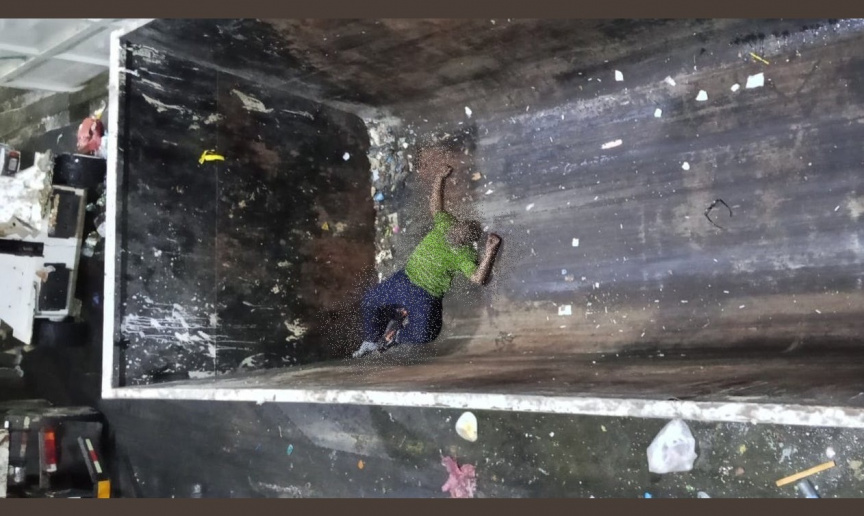
Image shared on social media of the WAMCO employee who is now on ventilator at IGMH following the accidental fall on February 22, 2026.
An employee has been critically injured in another incident at a Waste Management Corporation (WAMCO) site.
Police said a man sustained serious injuries in an incident inside a WAMCO site in Male' on Sunday evening. He is currently being treated on a ventilator at Indira Gandhi Memorial Hospital (IGMH), according to police.
Authorities have launched an investigation.
The case came to light after a social media post circulated with a photo from the scene. The post claimed the man fell into a container from a WAMCO ramp at around 3 am on Sunday. The ramp is estimated to be 12 to 13 feet above the container.
This is the second major incident reported from a WAMCO site in just over a month.
In January a 24‑year‑old foreign worker was found dead two days after he went missing from the Thilafushi WAMCO site. Police later said he died after falling from an excavator while clearing waste on the afternoon of January 26. His body was moved along with the debris during the operation.

CCTV footage showed the excavator striking the worker, identified as Ameen Mia, after which the work continued uninterrupted. The operator, 32‑year‑old Sri Lankan national Madranga Dissanayaka Menika, was arrested and detained. Police told the court the driver had been working illegally at the time.
The latest accident has renewed scrutiny over safety standards and supervision at WAMCO sites. With two serious incidents in just over a year, one resulting in a worker’s death and another now leaving an employee on a ventilator, questions are mounting over whether the corporation has adequate protocols, oversight, and training in place to protect staff operating in high‑risk environments. The recurring pattern of falls, machinery‑related injuries, and allegations of poor on‑site supervision underscores the need for WAMCO to urgently strengthen its safety frameworks, enforce compliance, and ensure that frontline workers are not exposed to preventable hazards.