date_range
Tuesday 10 Nov 2026


 LOCAL EDITION
close
 LOCAL EDITION


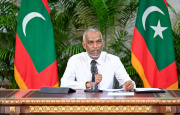
Minister Dr Abdullah Muthalib (L) accompanies President Dr Mohamed Muizzu (R) as he assess progress of Rasmale' reclamation: Muthalib has placed the cost of Rasmale' reclamation at USD 300M. (Photo/President's Office)
Minister of Infrastructure, Housing, and Urban Development Dr. Abdulla Muthalib, on Monday night, stated that the total cost to the state for reclaiming 1,009 hectares for Rasmalé is estimated at approximately USD 330 million.
The Minister made the statement in response to a question from a member of the public during the government's Ahaa forum.
The question sought clarification on the total expenditure required from the state budget and other resources to complete the reclamation of Rasmalé, amid conflicting figures circulating regarding the project's cost.
Responding to the inquiry, the Minister explained that when the Rasmalé project was first initiated, its estimated cost ranged between USD 500 million and USD 700 million. He noted that these initial estimates were based on prevailing market rates and the expenditure incurred by the previous administration on the reclamation of Gulhifalhu and Giraavarufalhu, including shore protection works.

However, the Minister said the cost had been significantly reduced by awarding the project to state-owned enterprises and chartering dredgers to maximise cost efficiency. While the government aims to complete the entire project by the end of this year, he stated that reclaiming the full 1,009 hectares is expected to cost approximately USD 330 million, with around USD 160 million allocated for the first 500 hectares.
"Although a small portion remains unreclaimed by the end of this year, our target is to finish the reclamation of Rasmalé within this timeframe. By then, the expenditure will be approximately USD 330 million. This means the total estimated cost to the state for the 1,009-hectare reclamation of Rasmalé is USD 330 million," Minister Muthalib stated.
Dr. Muthalib further claimed that suggestions that the project would cost USD 700 million or USD 1 billion were politically motivated narratives intended to create public concern. He also noted that a significant portion of the USD 330 million expenditure was being settled in Maldivian rufiyaa to reduce the impact on US dollar availability.