date_range
Sunday 08 Nov 2026


 LOCAL EDITION
close
 LOCAL EDITION


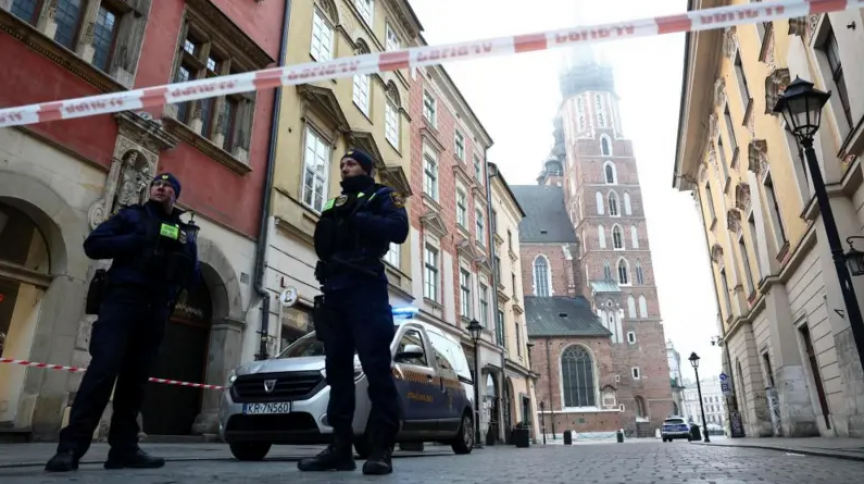
Polish police cordoning off an area near St. Mary’s Basilica in the Main Market Square of Kraków, Poland, following a mass shooting on November 7, 2026. (Photo/Reuters)
Three bodies have been discovered at the residence of a Polish gunman, shortly after he killed six people and wounded 16 others—including the suspect himself—in the historic centre of Krakow, Polish Prime Minister Donald Tusk confirmed.
Two women and one man were found dead inside the suspect's home, with Tusk stating there was "much to suggest that they are members of the (suspect's) immediate family".
Addressing a press conference in Krakow, Tusk designated the massacre an act of "terrorism" and declared two days of official remembrance.
"Sunday and Monday will be days of national mourning in Poland," he said, adding: "My office will determine what form (it) will take, but we will all undoubtedly live through these two days together."
Polish Interior Minister Marcin Kierwinski stated that the gunman appeared "fascinated by far-right ideologies" and held "ultra-nationalist views".
A British national was among those killed in the city centre, according to Polish police chief Marek Boron, who confirmed five foreign nationals remain among the hospitalised wounded.
Assault on Main Market Square
The earlier rampage unfolded when the suspect—a Polish citizen born in 2002 wearing military-style attire—drove a car onto Krakow's landmark Main Market Square and began firing randomly into crowds of pedestrians.
Police spokesman Andrzej Fijolek said the attacker wielded a semi-automatic rifle similar to the American AR-15.
Two police officers sustained wounds as they intervened to stop the gunman before shooting, detaining, and hospitalising him alongside the other injured victims.
"Everything suggests that the perpetrator held very, very radical views. A number of weapons were found in the car he was driving," Kierwinski said.
Deadly shootings remain rare in Poland, though the nation has maintained high alert following stabbings in October, alongside growing concerns over firearm licence increases—reaching 411,000 in 2025—and heightened regional security tensions.
__
Source: TRT