date_range
Friday 30 Oct 2026


 LOCAL EDITION
close
 LOCAL EDITION


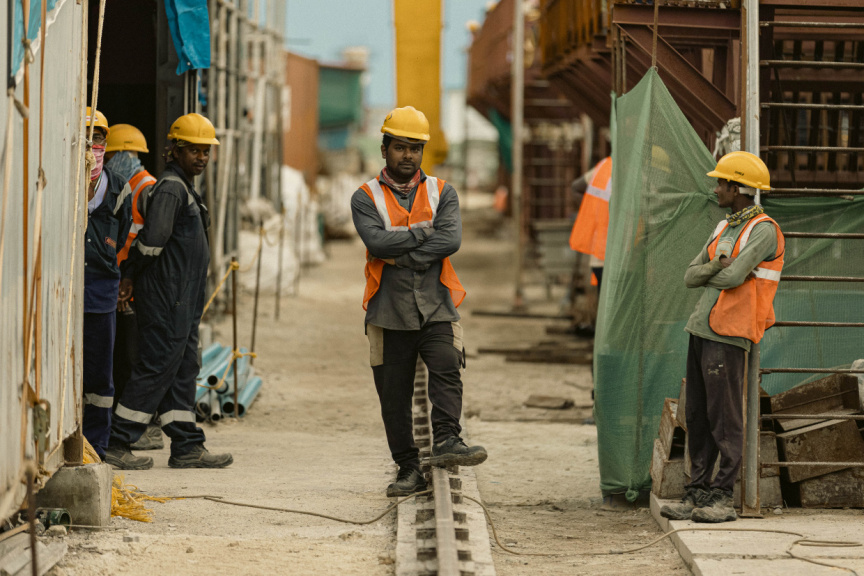
Workers at a construction site in Male': ILO warns that Maldives faces GDP losses in millions due to heat stress. (Sun Photo/Aaish Ashraf)
A study by the International Labor Organization (ILO) has found that global warming and rising workplace temperatures, known as heat stress, pose significant threats to workers, productivity and national economies in the Maldives and Sri Lanka, potentially resulting in losses worth millions of dollars by 2040.
The study’s findings indicate that the adverse effects on the economies and labor markets of both countries are expected to increase substantially in the coming years. Even if global greenhouse gas emissions are reduced, working hours lost due to extreme heat are projected to result in a combined loss equivalent to 147,000 full-time jobs across the two countries by 2040. This includes approximately 145,000 jobs in Sri Lanka and around 2,400 in the Maldives.
Based on historical data, the study also estimates that the combined annual GDP losses for both countries could reach USD 26.6 billion by 2040. Sri Lanka is projected to account for USD 26 billion of the losses, while the Maldives could experience a GDP reduction of approximately USD 576 million.
The study highlights that heat stress is already having economic consequences rather than being solely a future concern. In 2023, rising workplace temperatures driven by climate change had already resulted in additional losses in working hours and GDP in both countries compared to the 1985–2014 period.
In the Maldives, the service and construction sectors are expected to be the most severely affected. In Sri Lanka, the effects are projected to be most significant in agriculture, as well as the service, manufacturing and construction sectors.
ILO Country Director for Sri Lanka and the Maldives Joni Simpson stressed that protecting workers from excessive workplace heat must be an essential component of occupational health and safety policies. She also highlighted the importance of social dialogue between governments, employers and workers in developing practical solutions to protect livelihoods and ensure business sustainability.
Measures recommended to reduce these losses include adjusting work schedules to avoid peak heat hours, providing more frequent rest breaks, and ensuring workers have access to shaded areas, drinking water and cooling facilities.
The study also emphasises the need to monitor workplace temperatures, strengthen occupational health and safety standards, and raise awareness of heat-related risks. It further highlights the importance of providing social protection for workers whose incomes are affected by reduced working hours.
The research was conducted by the ILO with support from the Climate Vulnerable Forum (CVF) and the V20, covering six countries: the Maldives, Sri Lanka, Ethiopia, Ghana, Lebanon and Senegal.