date_range
Monday 19 Oct 2026


 LOCAL EDITION
close
 LOCAL EDITION



The UN agency said it is now assisting 1.1 million vulnerable people in Gaza.
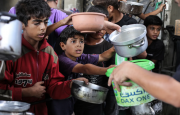
The UN World Food Programme (WFP) announced on Monday that funding shortages have forced it to cut food assistance in Gaza by around one-third, leaving half a million people without critical support as winter approaches.
In a statement, the agency said it is now assisting 1.1 million vulnerable people in Gaza, down from 1.6 million last month, while food rations have been halved.
Families receiving assistance will now get one food parcel instead of two, along with a smaller bag of wheat flour, it said.
???? Funding shortages are forcing WFP to reduce life-saving assistance in Gaza as winter approaches. Urgent support is needed to keep reaching the most vulnerable. ???? https://t.co/ZQaftBBLKX https://t.co/HlSA6draP2
— World Food Programme (@WFP) October 19, 2026
The number of daily hot meals has also dropped from 250,000 to 150,000, while families in hard-to-reach areas, including near the Israeli army-controlled "yellow line," will receive meals every other day instead of daily.
The agency has also reduced the value of cash assistance for 75,000 families.
According to WFP, an estimated 1.4 million people, or 67 percent of Gaza's population, face crisis-level food insecurity or worse, including around 200,000 experiencing emergency conditions requiring immediate food assistance to prevent deaths from hunger.
Only one in five children consumes a sufficiently diverse diet, while unemployment exceeds 80 percent, leaving many families unable to afford nutritious food.

Israeli restrictions further strain food supplies
Israeli restrictions on aid deliveries and commercial imports have further strained food supplies in Gaza, compounding the impact of WFP’s funding shortfall.
In July, the UN humanitarian office, OCHA, reported that only 42 percent of aid arriving via Egypt and 65 percent of shipments from Ashdod port could be offloaded at Kerem Shalom in one week.
WFP has also said more than 70 percent of Gaza’s cropland is inaccessible, with only about 3 percent currently usable, limiting local food production.

The suspension of commercial shipments last week has added to the pressure.
On October 14, COGAT, the Israeli military body overseeing humanitarian affairs, announced that commercial goods would no longer enter Gaza, cutting off a major source of perishable foods, including fruit and meat, which aid agencies typically do not supply.
WFP warned that "modest" improvements in food security since the October 2025 ceasefire remain "fragile" and could quickly be reversed by further reductions in humanitarian assistance.
Funding shortages have also forced the agency to halve its assistance in the occupied West Bank, from 400,000 to 200,000 people.
The agency said it urgently needs $450 million to sustain critical operations across Gaza and the West Bank over the next six months, through March 2027.
___
Source: TRT