date_range
Sunday 25 Oct 2026


 LOCAL EDITION
close
 LOCAL EDITION



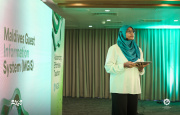
Fathimath Ameeza, Commissioner General of Taxation: MIRA has instructed to submit information regarding foreign agencies selling tourist beds in Maldives. (Photo/MIRA)
The Maldives Inland Revenue Authority (MIRA) has instructed all TGST-registered businesses, including resorts, guesthouses, and travel agencies, to report information regarding foreign parties engaged selling Maldives tourism products.
MIRA stated that the primary objective of gathering this information is to ensure that foreign entities required to register under the GST Act have complied with registration requirements.
Under the eighth amendment to the GST Act, providing inbound tourism products to the Maldives and related booking services are classified as services provided within the Maldives. Consequently, businesses operating abroad that sell tourist beds in the Maldives are now legally mandated to pay TGST to MIRA. This marks a significant change from previous regulations.
In a circular issued to businesses, MIRA clarified that following the ratification of the GST Act amendment, foreign tour operators, online travel agencies, and bed banks that do not have a permanent establishment in the Maldives must also register for GST with MIRA.
To facilitate this verification process, registered entities within the tourism sector are required to submit detailed information about the foreign agencies they conduct transactions with via MIRA’s Information Submission Portal by the upcoming Sunday.
The Maldives Association of Travel Agents and Tour Operators (MATATO) has expressed its opposition to this amendment, which imposes taxes on foreign travel agencies.
In a press statement released prior to the passing of the amendment, MATATO asserted that the change fails to address the concerns of local travel agents and tour operators. The association highlighted that adequate consultation with industry stakeholders was not conducted before introducing such a substantial change affecting Maldivian businesses.
Furthermore, MATATO argued that mandating registration for all foreign agents without a permanent presence in the Maldives would be difficult to enforce. They emphasized that the responsibility of educating thousands of foreign partners on tax regulations and monitoring their compliance should not be shifted onto local agents.
MATATO warned that these measures might lead foreign agents to reduce their promotion of the Maldives and shift their business to other destinations, which would primarily impact Maldivian small and medium-sized enterprises.
Additionally, as the amendment is set to take effect this October, MATATO noted that bookings and contracts for the upcoming peak tourism season have already been finalized, meaning this will impose an unforeseen financial burden. The association also voiced concern over the requirement for local agents to provide detailed information on their foreign business partners for taxation purposes.
MATATO called on the government not to "sacrifice" Maldivian agents in its efforts to increase state revenue. They urged the government and MIRA to delay the implementation of this amendment, conduct extensive consultations with tourism sector stakeholders, and provide a reasonable transitional period.
In addition to taxing foreign travel agents, an amendment mandating that resorts exchange 40 percent of their US dollar revenue was ratified yesterday and came into effect today. This amendment was also introduced by the government despite significant concerns voiced by tourism industry professionals.
However, after ratifying the amendment yesterday, President Dr. Mohamed Muizzu stated that no resort should find it difficult to exchange 40 percent of its revenue. The President further remarked that following this implementation, employees should be paid their salaries in US dollars.