
date_range
Monday 12 Oct 2026


 LOCAL EDITION
close
 LOCAL EDITION


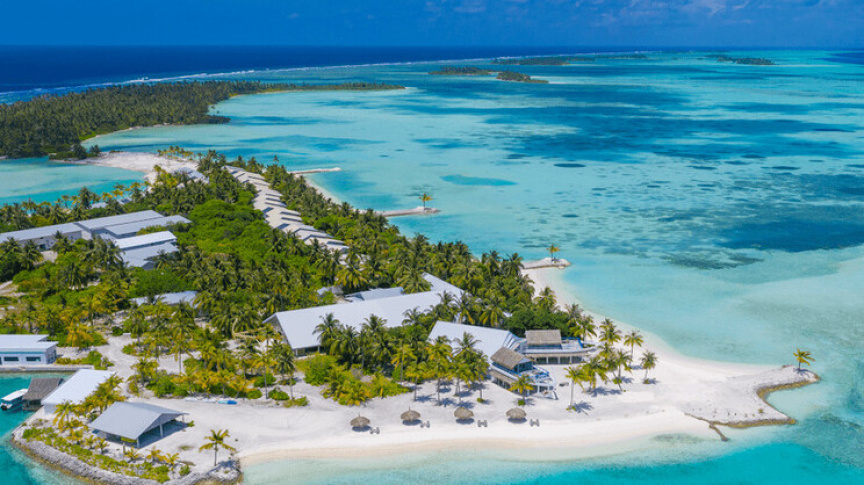
Rahaa Resort: Rahaa Resort and South Palm Resort have been cited for failing to exchange USD under Foreign Exchange Regulation. (Photo/Destination2)
The Maldives Monetary Authority (MMA), on Sunday, has disclosed the names of the resorts that have failed to comply with foreign exchange regulations requiring the mandatory conversion of foreign currency.
According to the central bank, Rahaa Resort and South Palm Resort Maldives have not exchanged any foreign currency. Rahaa Resort, located in Laamu Atoll, is operated by MO Hotels and Resorts, while South Palm Resort Maldives is located in Addu Atoll.
The MMA urged all parties subject to the Foreign Exchange Act to conduct their currency exchange activities in accordance with the law and relevant regulations. The Authority also noted that entities not yet registered with the MMA are being given opportunities to complete their registration and fulfill the required obligations.
The MMA noted that the vast majority of resorts are complying with the foreign exchange regulations. According to a compliance report issued by the Authority, 78 percent of resorts have fully met the dollar exchange requirements. However, the report found that 20 percent of resorts have not conducted the required currency exchanges adequately.

The central bank reminded the 20 percent of resorts, many of which have sought leniency citing various reasons, that they remain legally obligated to meet their regulatory requirements under the established framework.
For Category B, which covers guesthouses, hotels, and safari vessels, the report found that 48 percent of registered establishments have complied with the currency exchange requirements. Meanwhile, 15 percent have not conducted the required exchanges adequately, while 37 percent have not exchanged any dollars. As these establishments are predominantly small and medium-sized enterprises, the MMA said it is providing additional opportunities within the legal framework and conducting awareness programmes to improve compliance.
Category C consists of businesses with annual revenues exceeding USD 15 million. The MMA reported that 38 percent of businesses in this category have complied with the requirements, while 33 percent have not conducted the required exchanges adequately. A further 29 percent have not exchanged any dollars. Although these businesses have also sought concessions, the central bank explained that such changes would require legislative amendments, which have already been proposed.

Under the Foreign Exchange Act, the MMA retains 90 percent of the dollars exchanged. Of this amount, 30 percent is redistributed to banks, with priority given to locally owned Maldivian banks. The funds are allocated for specific purposes, including meeting the public's essential foreign exchange requirements and financing food imports. A significant portion of this allocation is also used to support the foreign exchange needs of small and medium-sized enterprises.
The MMA stressed that dollars exchanged by resorts directly benefit businesses as well as the general public. The Authority further noted that a significant share of the foreign currency reserves it holds is used to finance imports of essential commodities, including fuel, gas, and medicine.


