date_range
Sunday 25 Oct 2026


 LOCAL EDITION
close
 LOCAL EDITION


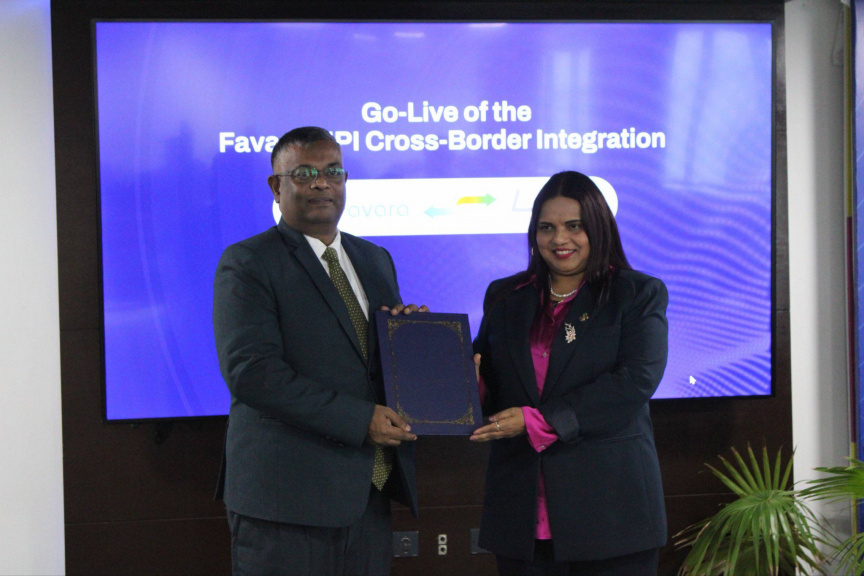
Indian High Commissioner G. Balasubramanian (L) and Maldivian Foreign Minister Iruthisham Adam (R) at the go‑live of Favara–UPI connectivity on July 30, 2026. (Photo/Indian High Commission)
On 30 July 2026, something quietly significant happened. The Maldives became the 11th country in the world where India’s Unified Payments Interface — UPI — went live.
Through an integration with Favara, the Maldives’ own national payment platform, the two systems are now connected. A tourist from Mumbai can scan a QR code at a guesthouse in Maafushi and pay in seconds. A Maldivian can transact across borders without the friction that has always made cross-border payments slower and more expensive than they need to be.
It sounds technical. But what it means for ordinary people is anything but complicated.
For the large number of Indian tourists who visit the Maldives, this is convenience they already understand. UPI is the way hundreds of millions of Indians pay for everything at home — from street food to airline tickets. Carrying cash in a foreign country, or worrying about card acceptance, has always added a layer of hesitation to travel. That hesitation is now removed.
Paying in the Maldives becomes as easy as paying at home, and that ease encourages spending — in local guesthouses, restaurants, shops and markets that form the backbone of our tourism economy outside the big resorts.
For Maldivian businesses, particularly smaller operators on local islands, this matters enormously. Guesthouses and cafés that previously struggled to accept foreign digital payments can now receive them effortlessly. This levels a playing field that has long tilted toward larger establishments with sophisticated payment infrastructure.
When a small island business can accept an Indian tourist’s UPI payment with nothing more than a QR code, that is genuine economic inclusion.

For the Maldivian financial system more broadly, the Favara-UPI integration marks a coming of age. Favara, as a national payments platform, has taken a significant step by becoming the first international integration partner for UPI in its category. That is not a small achievement. It places the Maldives alongside countries that have recognized the value of connecting with one of the most advanced and widely used digital payment ecosystems in the world.
Cross-border financial transactions have traditionally been slow, expensive and opaque. Every time money moves between countries, fees accumulate and time is lost.
Integrated real-time payment systems like this one change that equation — reducing costs, increasing speed and building the financial infrastructure that modern trade and tourism require.
Beyond the practical benefits, the Favara-UPI integration carries a diplomatic message. Financial connectivity is one of the deepest forms of bilateral integration. It means our systems trust each other enough to be linked. It means our economies are moving closer together at the level that matters most — not in speeches, but in transactions.
India and the Maldives have been building that trust across infrastructure, youth development, trade and tourism. Digital payments are the newest layer of that same story.
A tap on a phone. A payment completed. Two countries, a little more connected than they were before.