date_range
Friday 23 Oct 2026


 LOCAL EDITION
close
 LOCAL EDITION


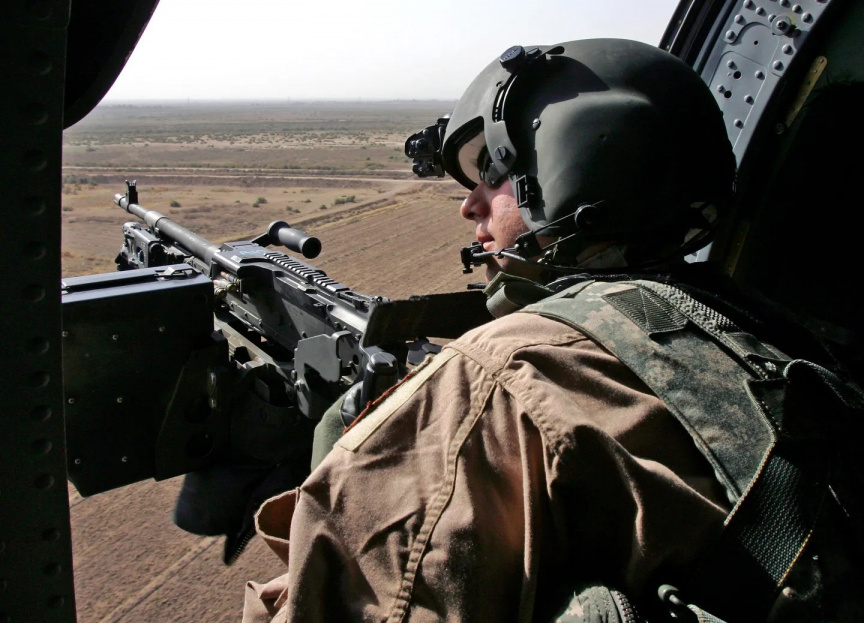
The US military will leave Iraq by the end of September, American and Iraqi officials have said, following a 23-year presence that started with the 2003 invasion. (Photo/Reuters)
The US military will leave Iraq by the end of September, American and Iraqi officials have said, following a 23-year presence that started with the 2003 invasion against then-leader Saddam Hussein.
US President Donald Trump, standing alongside Iraqi Prime Minister Ali al-Zaidi at the White House, said "we don't think we need the military there anymore" and noted Iraq's growing relationships with oil companies.
"The relationship is a whole big relationship where we don't need the military," Trump said. "We're there to help them. We're there to protect them if need be. But we don't think that's going to be necessary."
Speaking through an interpreter, al-Zaidi said, "US forces will be out of Iraq" by September 30, "while US companies will be inside Iraq."
The Pentagon said in a subsequent statement that it was reaffirming a 2024 agreement with Iraq to end its mission against Daesh terror group.
Pentagon Chief Pete Hegseth also emphasised that a normal bilateral defence relationship depends on a stable security environment "free from terrorist coercion."
Many of the US troops still deployed in Iraq at the time of the deal, which was made during the Biden administration, have already departed.
The US has been shifting the burden for combating Daesh in Iraq from American and coalition forces to Iraqi troops who have been trained by the US military.
American troops have been diminishing their footprint, withdrawing from areas and consolidating forces.
'Shock and awe'
The US invaded Iraq in March 2003 in what it called a massive "shock and awe" bombing campaign.
The invasion was based on what turned out to be faulty claims that Saddam Hussein had secretly stashed weapons of mass destruction (WMDs).
A few years after the invasion, then-US President George W. Bush admitted there were no WMDs in the Arab country.
Researchers estimate that nearly half a million people were killed or died from causes directly attributable to the war in Iraq from 2003 through 2011.
"I wish we had found the weapons of mass destruction," Bush told CNN in an interview.
Peak and drawdown
The US presence grew to more than 170,000 troops at the peak of counterinsurgency operations in 2007.
The Obama administration negotiated the drawdown of forces, and in December 2011, the final combat troops departed, leaving only a small number of military personnel behind to staff an office of security assistance and a Marine detachment to guard the embassy compound.
In 2014, the rise of the Daesh terror group and its rapid invasion of a wide swath across Iraq and Syria brought US and partner nation forces back at the invitation of the Iraqi government to help rebuild and retrain police and military units that had fallen apart and fled.
After Daesh terror group lost its hold on the territory, coalition military operations ended in 2021. The US had maintained about 2,500 troops in Iraq for training and to conduct partnered counter-Daesh operations with Iraq's military.
Many have withdrawn since the 2024 agreement to end the mission, with just a small contingent of military advisers and others still remaining in Iraq.
__
Source: TRT