date_range
Tuesday 27 Oct 2026


 LOCAL EDITION
close
 LOCAL EDITION


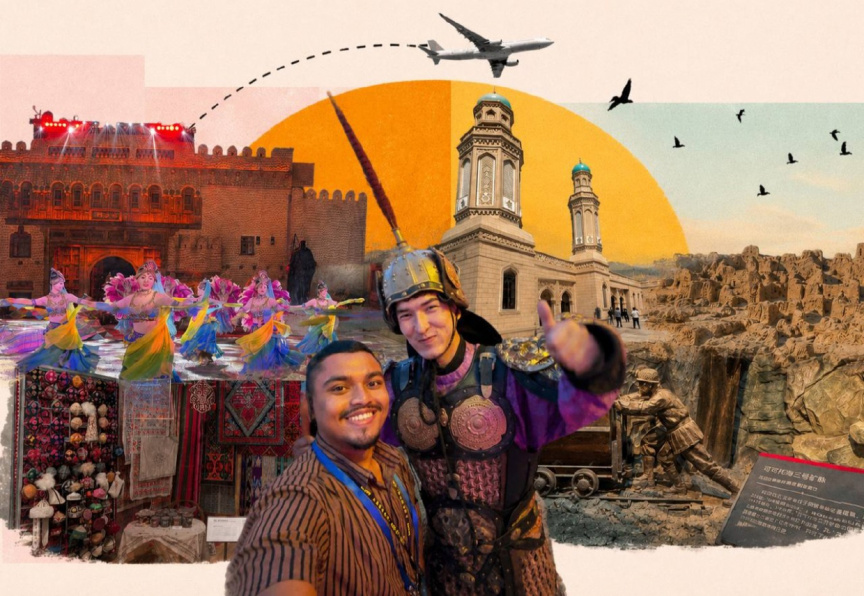
During my ten-day stay in Xinjiang, I experienced numerous enchanting moments. I documented every experience through videos and photographs. Among the many things I observed, what stood out most was the robust policy aimed at preserving the region's culture and heritage.
Beyond Xinjiang's economic growth, its bustling streets, and its magnificent gardens, one question repeatedly came to mind: In a world progressing at such a rapid pace, how can a society maintain its unique identity that spans thousands of years? Xinjiang provides a profound answer to this question. It serves as a significant lesson that extends beyond China’s borders to countries like the Maldives.
Monuments that tell their own history
Every historical site I visited presented a unique story. The Karez wells in Turpan are a testament to the depth of history. Built over 2,000 years ago, this underground irrigation network is a feat of engineering that channeled water from the distant Tianshan Mountains to sustain life in one of the world's most arid desert regions.

The museum in the premise showcased academic research and detailed information regarding this network. Walking through one of these underground channels, I felt the wisdom and the sheer resilience of the people who lived there. Most importantly, the site remains meticulously preserved to this day.
The Jiaohe Ruins offered an entirely different perspective. This is the world's only city built by excavating downwards into the earth rather than building upwards. Although wind and rain have eroded much of its original form, the care with which it is maintained allows visitors to still feel the grandeur of this ancient city.

Yotkan Ancient City: An unforgettable experience
While the various archaeological sites were impressive, one of the most captivating experiences was at Yotkan Ancient City in Hotan. This is a living cultural complex where an ancient city has been revitalized based on historical records.

Walking through its streets feels like stepping back thousands of years. Through theatrical performances depicting historical events, talented dancers, and short plays illustrating the governance of the era, I felt as though I had entered the past.
This was not merely entertainment; it was a space designed to inspire wonder in a child and provide scholarly value to an academic.

A lesson for the Maldives: What must we do?
The Maldives is a nation rich in culture and folklore. We have stories of our conversion to Islam, and the heroic struggle of Mohamed Thakurufaanu to save the nation from Portuguese rule. Our folklore and mythical tales remain vivid in our collective memory. Every atoll and island possesses its own unique identity, with specific cuisines, crafts, and narratives.
However, where can a Maldivian go today to experience these stories? Where can a tourist wishing to understand the true essence of the Maldives find these elements? Often, the answer is 'nowhere.'
In Xinjiang, every city has its own museum. The Xinjiang Intangible Cultural Heritage Museum was particularly striking. It didn't just house artifacts; instead, it beautifully showcased intangible elements like music, traditional instruments, local cuisine, and culinary techniques.

The food models were so realistic that I only realized they weren't genuine upon touching them.
The museum utilized videos and literature to demonstrate how different ethnic groups observe various traditions and special occasions.
The Maldives must establish a similar system. A single national museum in Male' is insufficient.
Every atoll should have cultural centers that showcase its unique identity.

The history of Addu should be told in the voices of the people of Addu.
There should be living museums showcasing the craftsmanship of Baa Atoll. This is not just about cultural preservation; it creates economic opportunities for skilled artists, dancers, painters, storytellers, and traditional craftsmen.
The greatest lesson I learned from Xinjiang is that it is not easy to uproot a people who know their own past. Investment in cultural heritage is not a waste. It is the only way to maintain one's identity amidst the changing times.

If the Maldives is to promote its own identity, we must choose this path. Our culture, traditions, and folklore should not remain solely in the memories of the elderly; they must be recorded and presented in modern, engaging ways.
In this era of rapid change, if we fall behind, we risk losing our cultural identity. Now is the time to accelerate efforts at the island, atoll, and national levels to build these vital cultural institutions.