date_range
Monday 12 Oct 2026


 LOCAL EDITION
close
 LOCAL EDITION


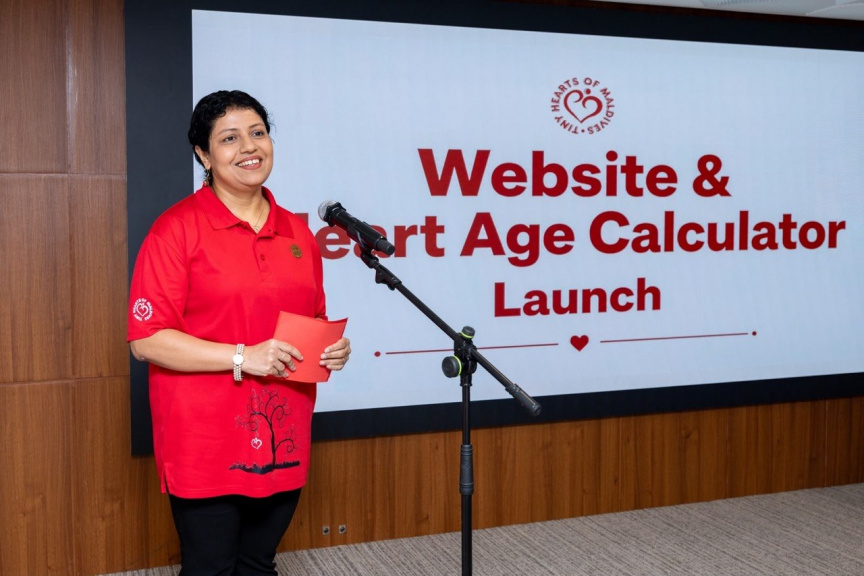
Tiny Hearts of Maldives launches a heart age calculator on July 8, 2026. (Photo/Tiny Hearts of Maldives)
Heart health advocacy group Tiny Hearts of Maldives has launched a heart age calculator, a new public health awareness tool in both Dhivehi and English designed to help people better understand their cardiovascular health.
The heart age calculator was launched in a ceremony held on Wednesday to mark the NGO’s 17th anniversary.
According to Tiny Hearts, the heart age calculator estimates a person’s “heart age” by looking at key cardiovascular risk factors such as age, sex, blood pressure, cholesterol, HDL cholesterol, smoking status, diabetes status, height and weight.

Instead of presenting risk only through medical numbers, the calculator translates these factors into an estimated heart age, making cardiovascular risk easier for people to understand and act on.
The NGO states that the tool is based on the internationally recognized Framingham cardiovascular risk framework, which has been widely used in public health to estimate future cardiovascular risk.
Heart age tools have been used globally as risk-communication tools to encourage people to take preventive action, seek medical advice when needed, and make lifestyle changes before complications occur.

The Tiny Hearts of Maldives’ version has been adapted to the Maldivian context, enabling anonymous atoll and island-level data collection to support local heart-health planning.
The NGO stressed that the calculator is intended to be educational and motivational, and is not a diagnostic tool and does not replace consultation with a doctor.
“Its purpose is to help people ask better questions about their health, understand how factors such as high blood pressure, high cholesterol, smoking, diabetes and weight affect the heart, and encourage timely conversations with healthcare providers,” said the NGO.

Tiny Hearts hailed the launch of the heart age calculator as an important step in strengthening cardiovascular disease prevention in the Maldives.
“Cardiovascular disease remains one of the country’s most significant public health concerns, yet many of its risk factors can be identified early and reduced through timely lifestyle changes, screening, treatment and follow-up,” said the NGO.
“By making risk visible in a simple and personal way, the calculator can help shift public awareness from late treatment to early prevention.”
A key feature of the tool is that it does not collect personal identifiers such as name, phone number, email address, IP address or device identifiers.

Instead, anonymous information such as atoll and island or city may be used to understand broad patterns of cardiovascular risk across communities.
Over time, this can help inform targeted awareness programs, community interventions and policy advocacy for heart health.
Through this initiative, Tiny Hearts said it hopes to make heart health conversations more accessible to families, communities, workplaces and health facilities across the country.
“The calculator gives individuals a simple starting point: know your numbers, understand your risk, and take action early,” said the NGO.