date_range
Saturday 22 Aug 2026


 LOCAL EDITION
close
 LOCAL EDITION


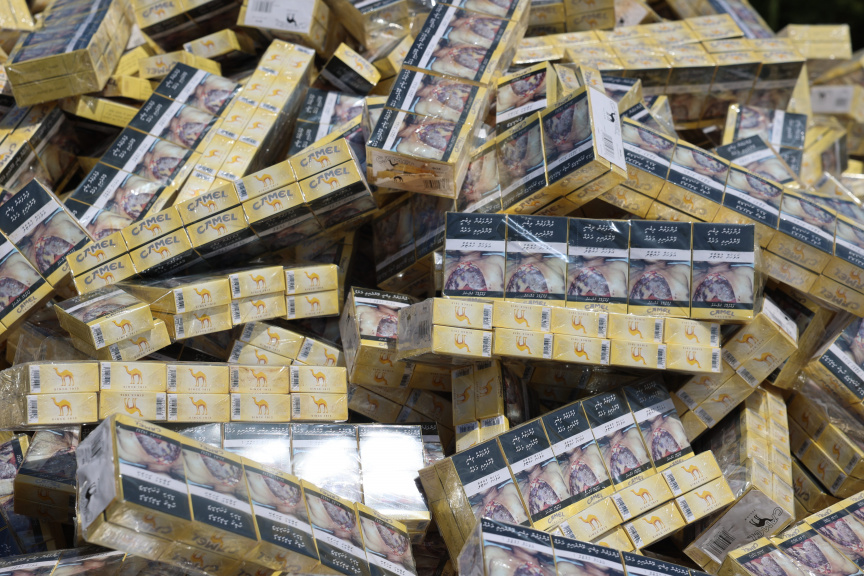
Authorities dispose of illegal shipments of cigarettes on October 19, 2025. (Sun Photo/Maaniu Mohamed)
Addiction professional and recovery coach Ali Adheeb has cautioned that reducing cigarette duty from MVR 8 to MVR 4 could have serious public health consequences, despite being viewed as a potential short-term measure to curb illicit trade and increase government revenue.
Adheeb made the remarks amid reports that the government is considering a reduction in tobacco-related taxes.
Home Minister Ali Ihusan recently stated that the government's decision to raise tobacco duty from MVR 3.50 to MVR 8.00 was a difficult one, adding that the administration is now exploring a 50 percent reduction.
Speaking at a press conference on Sunday, Minister Ihusan said the duty increase had originally been implemented in anticipation of vape users potentially turning to tobacco products following the nationwide ban on vaping.
Commenting on the proposal, Adheeb stressed that lowering cigarette prices would make tobacco products more affordable and accessible, thereby increasing the risk of tobacco use among young people.
He also warned that such a policy shift could undermine the effectiveness of the Maldives’ historic "generational ban" and discourage smokers from making attempts to quit.
On the issue of illicit trade, Adheeb acknowledged that lower prices could temporarily reduce black-market activity and increase legal sales. However, he noted that historical evidence indicates that reducing prices is neither a sustainable nor a long-term solution to combating smuggling. He further warned that any short-term financial gains could be offset by increased pressure on the healthcare system.
"Price is one of the most powerful tools we have to reduce the demand for cigarettes. Lowering prices sends the wrong message and threatens to reverse the progress we have made so far," Adheeb said.
He further argued that the most effective approach to protecting public health in the Maldives would be to strengthen law enforcement efforts, implement comprehensive tracking and tracing systems for goods, and maintain high tobacco prices.
Tobacco prices rose sharply following the duty increase introduced in November 2024. For example, the price of a cigarette pack that previously retailed for MVR 110 increased to MVR 240.
Following the increase, some businesses reported a decline in cigarette sales. However, concerns have since emerged over the growing sale of loose tobacco products for hand-rolling cigarettes, as well as an increase in the smuggling of illicit tobacco products.