date_range
Saturday 10 Oct 2026


 LOCAL EDITION
close
 LOCAL EDITION


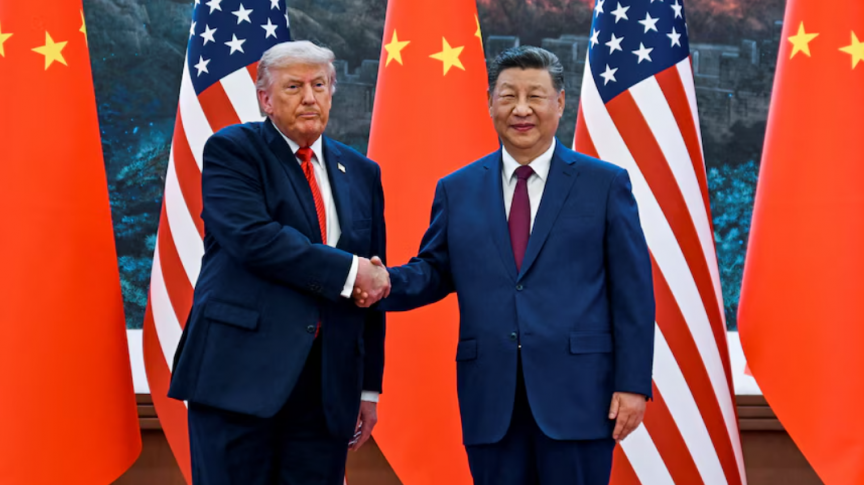
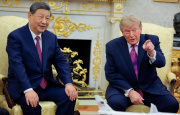
US President Donald Trump (L) and Chinese President Xi Jinping (R). (Photo/Reuters/Kenny Holston)
The following is an op-ed written by Kong Xianhua, the Chinese Ambassador to the Maldives.
___
Since the beginning of this year, the international situation has remained turbulent. The Ukraine crisis continues, tensions in the Middle East have escalated, and the spillover risks of the Gaza conflict are increasing. Shipping security in the Red Sea and the Strait of Hormuz has come under pressure, while the global energy market and supply chains continue to face strain. Meanwhile, the world economic recovery remains weak, with protectionism, unilateralism, and geopolitical confrontation on the rise.
Against this backdrop, the international community is calling more strongly for stability and certainty. Countries expect major powers to strengthen communication and coordination, avoid confrontation and conflict, and work together to safeguard world peace and development.
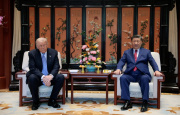
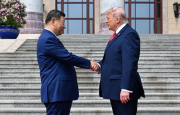
At this important moment, Chinese President Xi Jinping met with U.S. President Donald Trump in Beijing. The two sides agreed to build a “constructive China-U.S. relationship of strategic stability.” This consensus not only points the direction for bilateral relations, but also sends an important message in support of dialogue and cooperation and against conflict and confrontation.
As the world’s two largest economies and permanent members of the UN Security Council, China and the United States have a relationship that affects both countries and the wider world. The international community hopes that China-U.S. relations will remain stable and provide greater certainty for a turbulent world.
The constructive China-U.S. relationship of strategic stability reflects China’s thinking on how major countries should get along with each other. Its core meaning can be understood in four aspects.
First, it should be positive stability where cooperation is the mainstay and the relationship gets more resilient through exchange and cooperation.
Global challenges cannot be addressed by any country alone. Whether in global economic recovery, energy security, climate change, or regional hotspot issues, stronger international cooperation is needed.
China has always believed that cooperation benefits both China and the United States, while confrontation harms both sides. Cooperation benefits not only the two countries, but also the world.
During the meeting, the two sides agreed to strengthen cooperation in economy and trade, agriculture, health, and people-to-people exchanges, and to maintain communication at all levels. This will help stabilize China-U.S. relations and global market expectations.
Second, it should be healthy stability where competition is kept within proper limits and is not turned into a zero-sum game.
Competition between China and the United States is a reality, but it should not become a zero-sum game or lead to confrontation.
China believes competition should be fair, healthy, and mutually reinforcing, rather than aimed at suppressing the development of other countries.
The constructive China-U.S. relationship of strategic stability emphasizes clear boundaries in competition, so as to prevent rivalry from getting out of control and avoid bloc confrontation or a “new Cold War.”
For developing countries, including the Maldives, a stable and open international environment is especially important. China will continue to pursue high-standard opening up and mutually beneficial cooperation, providing stable momentum for the world economy.
Third, it should be constant stability where differences are manageable and the relationship should not be like a roller coaster.
China and the United States have different cultures, systems, and stages of development. Differences are natural. The key is to manage them properly rather than allow them to dominate bilateral relations.
At a time when risks of miscalculation among major countries are rising, maintaining dialogue and communication is itself an important source of stability. The two sides agreed to strengthen communication at all levels to reduce miscalculation, build mutual trust, and stabilize expectations.
The Taiwan question remains the most important and most sensitive issue in China-U.S. relations. There is but one China in the world, and Taiwan is an inalienable part of China’s territory. “Taiwan independence” is fundamentally incompatible with peace and stability across the Taiwan Strait, and seeking independence through external support is a dead end. Adherence to the one-China principle and the three China-U.S. joint communiqués remains the political foundation of China-U.S. relations and the key to peace and stability across the Taiwan Strait.
Recently, President Trump stated that the U.S. policy on Taiwan remains unchanged, does not support “Taiwan independence,” and hopes both sides across the Taiwan Strait will remain calm. China has taken note of these remarks.
Fourth, it should be lasting stability where peace is expectable and conflicts and wars are not acceptable.
The prolonged Ukraine crisis and tensions in the Middle East once again show that there are no winners in conflict and confrontation, while dialogue and peace are the only way forward.
China has consistently advocated peace talks, promoted political settlement of disputes, and opposed the use of force and bloc confrontation. On both the Middle East and Ukraine issues, China has called for advancing peace through dialogue.
China stands ready to work with all countries, including the Maldives, to uphold multilateralism and cooperation, safeguard international justice, and promote world peace and development.
A stable, open, and responsible China will always remain an important force for world peace and stability.