date_range
Monday 19 Oct 2026


 LOCAL EDITION
close
 LOCAL EDITION


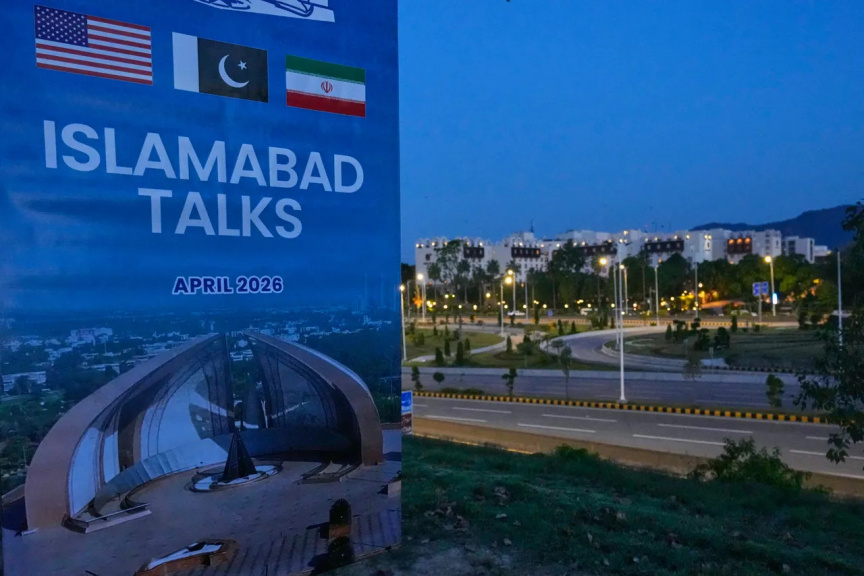
Despite numerous obstacles to peace, both sides appear to have strong reasons to consider de-escalation. (Photo/AP)
After a sleepless, at times tense night in Islamabad, Iranian and US officials ended their highest-level talks in decades without a breakthrough, but 11 sources familiar with the negotiations said the dialogue remained alive.
The weekend meeting to resolve the conflict between the US and Iran, held four days after last Tuesday's ceasefire announcement, was the first direct encounter between US and Iranian officials in more than a decade and the most senior engagement since Iran's 1979 Islamic Revolution.
A Pakistani government source told Anadolu Agency that the next round of "high-level" US-Iran talks will be held in Islamabad "very soon."
Inside Islamabad's luxury Serena Hotel, the talks unfolded across two separate wings and one common area — one for the US side, one for the Iranians and one for trilateral meetings involving Pakistani mediators, operational staff told Reuters news agency.
Among the slew of issues at stake was the Strait of Hormuz, a major transit point for global energy supplies that Iran has effectively blocked, but the US has vowed to reopen, as well as Iran's nuclear programme and international sanctions on Tehran.
Phones were not allowed in the main room, forcing delegates, including US Vice President JD Vance and Iranian Parliamentary Speaker Mohammad Baqer Qalibaf, to step out during breaks to relay messages back home, two of the sources said.
"There was a strong hope in the middle of the talks that there would be a breakthrough and the two sides would reach an agreement. However, things changed within no time," a Pakistani government source said.
Another source involved in the talks said the parties came "very close" to an agreement and were "80 percent there" before running into decisions that could not be settled on the spot.
Two senior Iranian sources described the atmosphere as heavy and unfriendly, adding that while Pakistan tried to soften the mood, neither side showed any willingness to ease tensions.
Turning point
Nevertheless, the two Iranian sources said that by early Sunday morning, the atmosphere had shown some improvement, and the possibility of a one-day extension began to take shape.
However, differences persisted. A US source said the Iranians did not properly understand that the core US aim was to have a deal that ensured Iran would never obtain a nuclear weapon. Among Iran's concerns was a distrust of US intentions.
This account, based on sources who spoke on condition of anonymity due to the sensitivity of the matter, offers a first account of the internal dynamics of the meeting, how the mood in the room shifted, how talks ended after signs that the meeting might be extended, and how further dialogue remains on the cards.
On Monday, US President Donald Trump claimed Iran had "called this morning" and that "they'd like to work a deal."
A US official, referring to Trump's comment, said there was continued engagement between the US and Iran and forward motion on trying to get to an agreement.
Asked for comment, White House spokeswoman Olivia Wales said the US position had never shifted in the Islamabad meeting.
"Engagement continues toward an agreement," she said.
Reasons to de-escalate
A Middle East-based diplomat said conversations between mediators and the Americans have continued since Vance left Islamabad, while the source involved in the talks said Pakistan was still passing messages between Tehran and Washington.
"I want to tell you that a full effort is still on to resolve the issues," Pakistan's Prime Minister Shehbaz Sharif said on Monday.
Despite numerous obstacles to peace, both sides appear to have strong reasons to consider de-escalation.
The US strikes appear unpopular at home and look unlikely to topple Iran's government, while Tehran's strangling of energy supplies is hurting the global economy and pushing up inflation months before the US midterm elections.
In Islamabad, the two sides had gathered to try to chart a path to a long-term settlement, after a Pakistan-brokered ceasefire paused six weeks of war that has killed thousands of people and disrupted the world's energy supplies.
A White House official said the US wanted Iran to end all uranium enrichment, dismantle all major nuclear enrichment facilities, turn over its highly enriched uranium, accept a broader peace, agree on a security framework that includes regional allies, end funding for regional proxies and fully open Hormuz, charging no tolls.
Iran's demands included a guaranteed permanent ceasefire, assurances of no future strikes on Iran and its allies in the region, lifting of primary and secondary sanctions, unfreezing of all assets, recognition of its right to enrichment and continued control of Hormuz, Iranian sources have said.
Four of the 11 sources said that at times the dialogue appeared close to producing at least a framework understanding, but unravelled over Iran's nuclear programme, the Hormuz Strait, and the amount of frozen assets Tehran wants access to.
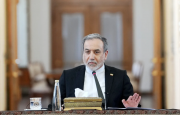
The Iranian sources said most of the substantive exchanges in Islamabad were between Vance, Qalibaf and Iranian Foreign Minister Abbas Araqchi.
Pakistani representatives, including Army Chief Asim Munir, and Foreign Minister Ishaq Dar, moved between the sides through the night to keep things on track, five Pakistani sources said.
A US source said the vice president came to the talks with the aim of making a deal and reaching a mutual understanding.
Despite the deadlock, when Vance appeared in front of reporters later to announce the talks had ended, his remarks suggested more exchanges of some kind might be in prospect.
"We leave here with a very simple proposal, a method of understanding that is our final and best offer," he said. "We'll see if the Iranians accept it."
__
Source: TRT