date_range
Wednesday 21 Oct 2026


 LOCAL EDITION
close
 LOCAL EDITION


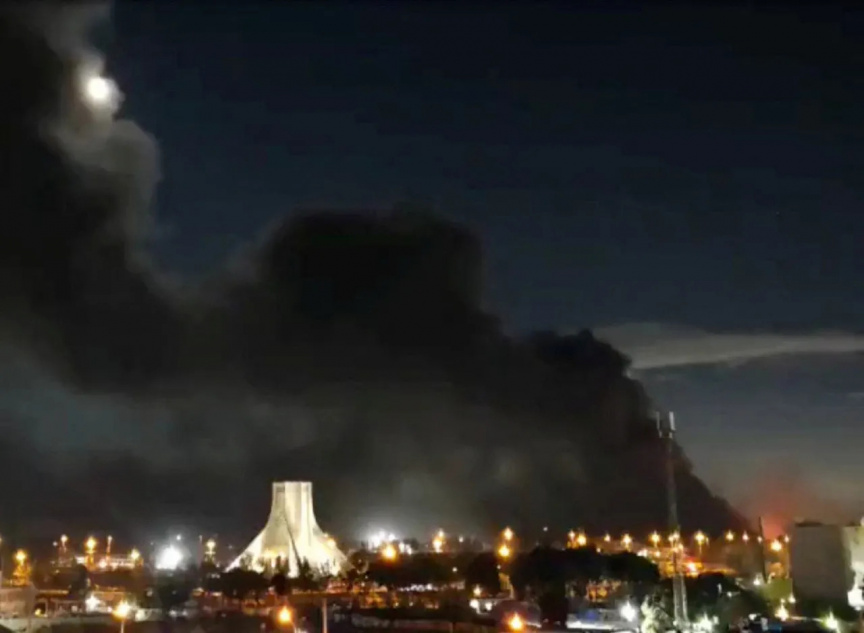
Smoke rises over Tehran’s Azadi Square after a strike during the US-Israeli war on Iran, April 6, 2026, in a social media video screengrab. (Photo/Reuters)
The world is on the edge, and mediators are rushing to get an agreement as the deadline approaches for US President Donald Trump’s threat that he will blow up civilian infrastructure in Iran if the Strait of Hormuz remains closed.
Such a scenario is not just critical for Iran, which has threatened to launch retaliatory attacks even more harshly against the power and desalination plants in the energy-producing Gulf states hosting US military and financial assets.
Trump has issued several warnings to Iran in the past few weeks, but his latest threat, which came on Sunday, poses the most serious challenge.
Posting on Truth Social, Trump used expletive-laden language, telling the Iranian leadership they would be “living in Hell” if they did not open the Hormuz Strait, adding that “Tuesday will be Power Plant Day, and Bridge Day, all wrapped up in one.”
Israel-US strikes against Iran have killed nearly 2,000 people, including children, since the beginning of the war and have injured tens of thousands.
Regional countries, including Türkiye, Pakistan and Egypt, are trying to mediate a ceasefire.
Here’s what we know about the proposal.
Limited ceasefire
Pakistan has proposed a two-tier framework to end the Iran-US conflict, which was shared overnight with Tehran and Washington, and could take effect as early as Monday.
The plan begins with an immediate ceasefire to reopen the Strait of Hormuz, followed by 15–20 days of negotiations to reach a comprehensive “Islamabad Accord.”
"All elements need to be agreed today," through an electronic memorandum of understanding facilitated by Pakistan, the only communication channel between the parties, according to a Reuters report.
Axios first reported on Sunday that the US, Iran and regional mediators were discussing a potential 45-day ceasefire as part of a two-phase deal that could lead to a permanent end to the war, citing US, Israeli and regional sources.
However, a senior Iranian official told Reuters on Monday that Tehran will not reopen the strait in exchange for a "temporary ceasefire"
The official confirmed Iran had received Pakistan's proposal for an immediate ceasefire and was reviewing it, adding that Tehran does not accept being pressured to accept deadlines and make a decision.
The broader settlement is expected to include Iranian commitments not to pursue nuclear weapons in exchange for sanctions relief and the release of frozen assets.
The United Arab Emirates, the tiny oil-rich Gulf country, which has been hit hard during the five-week war by Iranian missiles and drones, has emphasised that unrestricted use of the strait must be part of any agreement.
Negotiation efforts
Iran has outlined its positions and demands in response to recent ceasefire proposals relayed through intermediaries, a Foreign Ministry spokesperson said on Monday.
Spokesperson Esmaeil Baghaei stressed that negotiations cannot coexist with “ultimatums or threats of war crimes,” declaring that Tehran’s requirements, rooted in its national interests, have already been communicated through back channels.
Baghaei said Iran has prepared its own formal responses and will disclose details at the appropriate time.
Iranian officials have previously insisted on a permanent ceasefire with guarantees against future US or Israeli attacks.
The nuclear boogeyman
Israel, the archenemy of Iran, on the other hand, has been pressuring the US to keep Iran’s nuclear programme and ballistic missiles in the agreement. Tel Aviv also said that it will not stop attacking Lebanon even if there is a peace deal with Iran.
Despite the war in the Middle East, Trump has multiple times said that indirect negotiations between Tehran and Washington were underway.
The US has proposed a 15-point plan to Tehran via Pakistan, including demands for Iran to end nuclear enrichment in exchange for sanctions relief.
Tehran initially rejected the terms and denied direct talks while exchanging messages through intermediaries; however, later it accepted talks with the Americans.
Pakistan has emerged as one of the leading mediators, relaying proposals between Washington and Tehran, offering to host peace talks in Islamabad, and coordinating with regional partners.
Türkiye has also actively conveyed messages between Iran and the US and participated in multilateral diplomatic meetings alongside Pakistan, Egypt, and Saudi Arabia to push for a ceasefire and prevent wider regional spillover.
Fate of Hormuz
Iran's Revolutionary Guards Corps (IRGC) announced on Sunday that it is finalising operational preparations to impose new rules in the Strait of Hormuz.
In a statement posted on X, the IRGC naval force said it is implementing Tehran’s declared plan for a “new Persian Gulf order” in the strategic waterway.
The Guards warned that shipping conditions in the Strait of Hormuz “will never return to its former status,” particularly for the US and Israel.
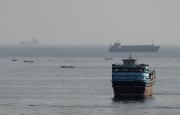
The vital chokepoint has been largely closed to international traffic since the outbreak of war between Iran, the US, and Israel on February 28.
Since the conflict began, Iran has permitted only minimal vessel movements through the Strait of Hormuz, disrupting approximately one-fifth of global oil and gas supplies.
Oman’s state news agency reported that Iranian and Omani officials held talks on Sunday aimed at easing passage through the still effectively closed strait.
Iranian lawmakers have recently proposed introducing tolls and taxes on all vessels transiting the Strait of Hormuz under the new security regime.
___
Source: TRT