date_range
Thursday 08 Oct 2026


 LOCAL EDITION
close
 LOCAL EDITION


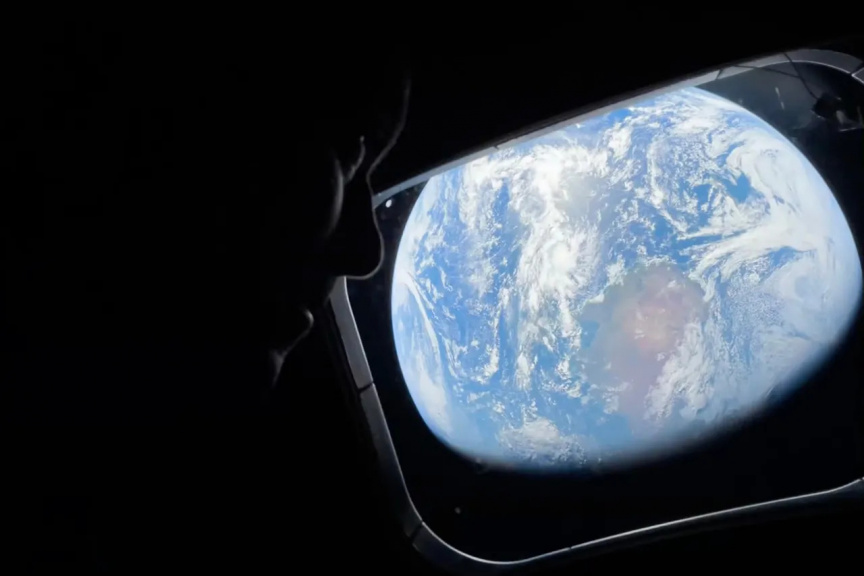
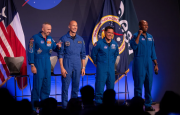
NASA crew is nearing lunar orbit as historic flyby approaches. (Photo/AP)
Astronauts on NASA’s Artemis II mission have prepared to enter the Moon’s "sphere of influence", marking a key milestone in humanity’s first crewed lunar flyby in more than 50 years.
As they reached day five of the 10-day mission, the Orion spacecraft was about 346,000 kilometres from Earth and roughly 104,000 kilometres from the Moon, according to NASA.
Earlier, NASA released an image captured by the crew showing the Moon in the distance, with the Orientale basin visible.
"This mission marks the first time the entire basin has been seen with human eyes," NASA said.
The next major milestone is expected overnight, when the spacecraft enters the Moon’s gravitational sphere of influence, where lunar gravity becomes stronger than Earth’s.
During the flyby, astronauts will observe the Moon directly and capture images using onboard cameras.
Even in darkness, we glow.
— NASA (@NASA) April 3, 2026
In this image of Earth taken by the Artemis II crew, we can see the electric lights of human activity. In the lower right, sunlight illuminates the limb of the planet. pic.twitter.com/kWcjHFvoDM
Record-breaking mission
NASA said the crew has completed manual piloting demonstrations and reviewed plans for the flyby, including mapping and photographing key surface features.
At the same time, teams are closely monitoring the spacecraft’s life support systems.
On day five, astronauts also tested their emergency "survival" suits, designed for launch, re-entry and potential emergencies such as cabin depressurisation.
If the mission proceeds as planned, the crew could travel farther from Earth than any humans before.
The astronauts are expected to pass behind the Moon, where they will temporarily lose communication with Earth.
NASA said data gathered during the mission will be critical for future lunar operations, including Artemis III and Artemis IV missions later this decade.
___
Source: TRT