date_range
Tuesday 25 Aug 2026


 LOCAL EDITION
close
 LOCAL EDITION


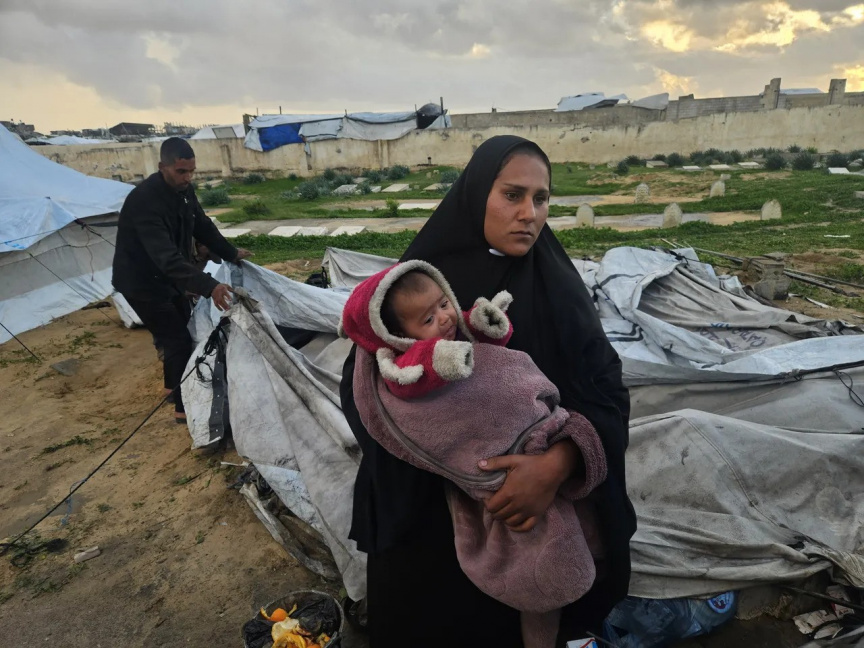
Thousands of tents for displaced families across Gaza were damaged or blown away as a powerful winter storm battered the enclave, worsening already dire living conditions. (Photo/AA)
Thousands of tents for displaced families across Gaza were damaged or blown away as a powerful winter storm battered the enclave, worsening already dire living conditions and fuelling fears of a deepening humanitarian disaster, Gaza’s Civil Defence said.
Mahmoud Basal, Civil Defence spokesperson, said on Saturday that strong winds and heavy rain caused widespread destruction to temporary shelters housing displaced Palestinians, particularly along Gaza’s coastline, where tents were ripped apart or swept away by gusts reaching up to 60 kilometres per hour (37 miles per hour).
He also linked the crisis to Israel’s continued blocking of humanitarian and reconstruction aid from entering Gaza.
“This is not merely a weather-related crisis,” Basal said in a statement. “What we are witnessing is a direct consequence of blocking the entry of construction materials and obstructing reconstruction, forcing people to live in torn tents and unsafe, damaged homes without dignity or protection.”
The latest storm began on Friday and is expected to continue with unstable conditions, according to Palestinian meteorologists, who warned of ongoing rainfall and strong winds in parts of the territory.
Basal warned that each new weather system now turns into a “real humanitarian catastrophe” due to the ongoing blockade, noting that thousands of tents remain vulnerable to collapse or displacement as conditions persist.
He said many families were forced to pitch their tents along the seashore after vast urban areas were rendered uninhabitable by over two years of Israeli bombardment, leaving no safe alternatives inland.
During a similar storm in late December, hundreds of tents sheltering displaced families along the coast of Khan Younis were flooded as seawater surged inland.
Basal also warned of thousands of partially destroyed homes at risk of collapse, saying cracked walls and weakened structures pose a deadly threat, particularly during periods of heavy rain and strong winds.
Over recent months, dozens of residential buildings previously damaged by Israeli air strikes collapsed during storms, resulting in casualties, he said.
“The population is living in catastrophic conditions, inside shredded tents and unstable homes, without even the minimum standards of safety or human dignity,” Basal added.
He stressed that conditions in Gaza fall far below basic humanitarian standards and constitute a grave violation of international humanitarian law.
The Israeli army has killed more than 71,000 people, most of them women and children, and wounded over 171,000 others in a genocide since October 2023 that has left Gaza in ruins.
Despite a ceasefire that began last October 10, the Israeli army has continued its attacks, killing 424 Palestinians and wounding 1,189 others, according to the Palestinian health ministry.
___
Source: TRT